


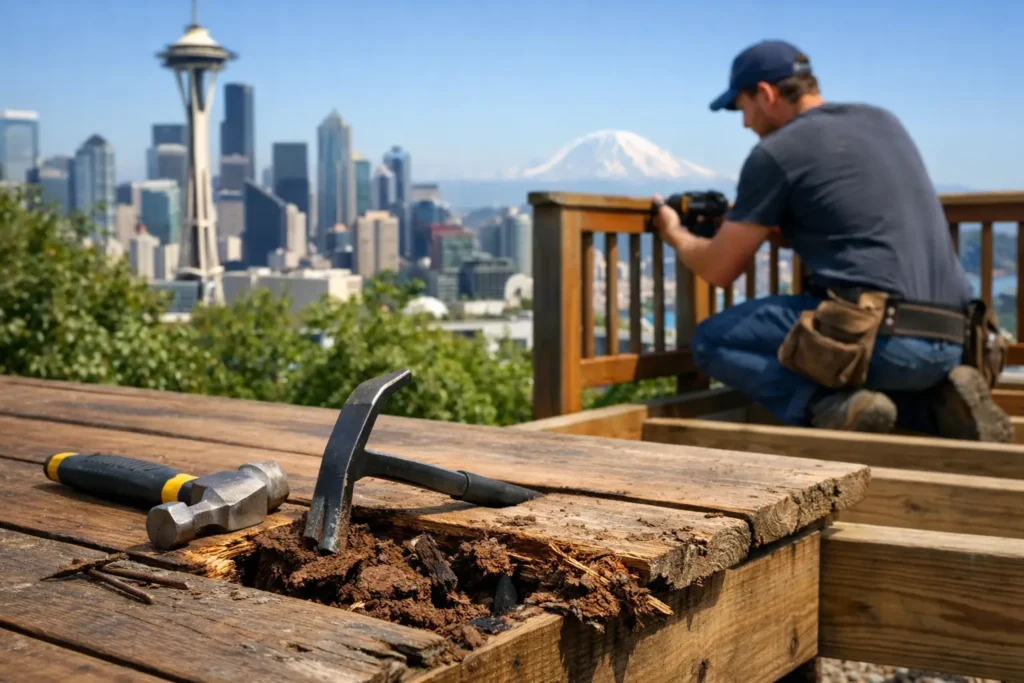
A deck can look acceptable from the yard while moisture is quietly weakening the framing beneath it. That is why Seattle deck repair should begin with more than replacing a few weathered boards.
In the Pacific Northwest, repeated rain, shaded conditions, clogged drainage paths, and years of wet debris can turn a small maintenance issue into a safety concern.
A good repair identifies where water is getting in, how far damage has traveled, and whether the existing structure can safely support the deck you use every day.
The right answer may be a focused repair, a partial rebuild, or full replacement. The condition of the framing, footings, railings, and connections matters more than the surface appearance alone.
When Seattle Deck Repair Should Not Wait
Homeowners often notice deck problems first as soft spots, splintering boards, loose railings, or a deck that feels less solid underfoot.
Those symptoms deserve attention, especially when the deck is elevated or attached to the home. A damaged handrail or stair system can create an immediate fall risk.
Rot around a ledger connection or support post can affect the structure itself.
Watch for several signs at once rather than judging the deck by one board. A single cracked board may be a straightforward replacement.
Widespread decay, however, usually points to a larger moisture-management or framing problem.
- Deck boards feel spongy, flex more than they used to, or break apart near fasteners.
- Posts are soft at the bottom, visibly split, or sit where soil and standing water collect.
- Railings move when pushed, balusters are loose, or stairs shift under normal use.
- Metal hardware is heavily rusted, missing, or pulling away from the wood.
- Water drains toward the house, collects against the deck, or remains trapped below it.
Seattle’s wet season makes these conditions more common, but moisture alone is not always the whole story.
Poor flashing, inadequate clearance between wood and soil, undersized supports, and older construction methods can all shorten a deck’s service life.
Windstorms can also loosen connections and railings even when the deck boards appear intact.
Repair or Replace? The Decision Depends on the Structure
Seattle deck repair is usually the right choice when the deck has a sound foundation and framing but has localized damage.
For example, replacing a limited number of deck boards, rebuilding a stair section, tightening railings, or replacing a damaged post can extend the useful life of a structurally solid deck.
This approach preserves the parts that are still performing well and directs the budget toward the actual problem.
Replacement becomes the better value when rot is widespread in the joists, beams, posts, or ledger area.
Covering weak framing with new decking does not make the deck safe. It can also create a more expensive problem later because the new surface may need to be removed before the underlying structure can be corrected.
Age alone does not decide the issue. A well-built wood deck that has been maintained and drains properly may have years of service left.
On the other hand, a newer deck with poor flashing or ground-contact wood in the wrong location can deteriorate quickly.
An onsite review is the practical way to separate cosmetic wear from structural decline.
The Ledger Connection Deserves Close Attention
The ledger is the board that connects many decks to the house. When this area lacks proper flashing or has deteriorated fasteners, water can enter behind the deck.
This moisture can damage the connection or adjacent house framing. Because the connection carries significant load, it is not a place for a surface-level repair.
A contractor should inspect the ledger, fasteners, flashing, and nearby siding before recommending a plan.
If the deck is freestanding, the focus shifts to its beams, posts, footings, and bracing.
Either way, the repair scope should explain what will be opened, replaced, reinforced, and protected from future moisture.
What a Thorough Deck Repair Process Looks Like
A dependable repair starts with a clear assessment, not a guess based on a few photographs.
The visible deck boards tell part of the story. The underside, structural connections, support locations, stairs, railing attachment points, drainage conditions, and the deck’s relationship to the house all need to be considered.
Once the condition is understood, the repair plan should match the actual scope.
That may include removing damaged decking to access framing, replacing compromised joists or beams, installing properly rated hardware, rebuilding railings to current requirements, improving flashing, or correcting drainage near the support posts.
If a repair affects structural elements or changes the deck’s layout, permits and code requirements may apply.
The requirements depend on the property and scope of work. Homeowners can review the official Seattle Department of Construction & Inspections website for permit information.
For Seattle deck repair, material selection matters as well. Pressure-treated lumber remains a practical structural material when correctly installed and kept clear of persistent ground moisture.
Cedar offers a natural appearance but still needs proper detailing and maintenance in our climate. Composite decking can reduce routine surface maintenance and resist rot.
However, composite decking does not eliminate the need for sound framing, correct spacing, and drainage below the deck.
There are trade-offs with every material. Composite can cost more up front and may require careful attention to heat movement and manufacturer spacing requirements.
Wood can be easier to repair in isolated areas, but it needs periodic cleaning, sealing, and prompt replacement of damaged boards.
The best choice depends on the deck’s condition, your maintenance expectations, and whether the project is a repair meant to extend service life or part of a larger rebuild.
Preventing the Next Moisture Problem
Repair work should solve the cause of the damage whenever possible.
If leaves and soil are packed between boards, water will stay on the deck longer. If the ground beneath the deck remains wet, post bases and lower framing are exposed to more moisture than they should be.
If downspouts discharge near the deck, runoff can undermine footings or keep surrounding soil saturated.
Regular cleaning is simple but useful. Clear debris from the deck surface and the spaces between boards, especially after fall leaf drop.
Keep vegetation trimmed back so air can circulate around the deck. Check that gutters and downspouts direct water away from the house and deck supports.
These small habits will not correct failed framing, but they can slow moisture-related wear on a sound structure.
Homeowners should also inspect railings and stairs at least once a year. Push gently on the railing, look for loose fasteners, and pay attention to changes in how the stairs feel.
A deck rarely fails without showing clues first. Catching movement, rot, or drainage issues early often keeps the repair focused and manageable.
Get a Scope You Can Understand
The difference between a frustrating deck project and a well-managed one often comes down to the scope of work.
You should know whether the estimate includes demolition, disposal, framing repairs, decking, railings, stairs, hardware, drainage corrections, and any needed permit-related work.
Vague allowances can create uncertainty once damaged areas are opened.
A detailed fixed-scope bid gives homeowners a clearer picture of what is being repaired and why.
It also creates a practical conversation if hidden damage is discovered after demolition. No contractor can see through intact decking.
However, the original proposal should establish a disciplined approach to evaluating and documenting conditions rather than leaving major decisions undefined.
Seattle Fence and Decks approaches repairs with the same focus used for new outdoor construction: identify the structural condition, explain material options plainly, and build the solution for Northwest weather.
For an onsite estimate, call Kevin at (425) 449-6739.
A safe deck should feel like part of your home, not another problem to monitor every time it rains.
Addressing early warning signs now gives you more control over the repair, the budget, and the years of outdoor use ahead.
Professional Seattle deck repair can help address underlying damage before it becomes a more extensive structural problem.
Frequently Asked Questions About Seattle Deck Repair
1. How do I know if my deck needs repair or replacement?
Soft boards, loose railings, cracked stairs, and visible wood rot are common warning signs. If the damage is limited and the framing remains sound, repairs may be enough. Widespread rot in joists, beams, posts, or ledger connections may require a partial or complete replacement.
2. How much does Seattle deck repair cost?
The cost depends on the extent of the damage, materials, labor, and whether structural repairs are needed. Replacing a few boards generally costs less than rebuilding stairs or repairing damaged framing. An onsite inspection can help establish an accurate estimate.
3. What causes deck rot in Seattle?
Frequent rain, trapped moisture, poor drainage, and inadequate flashing can contribute to deck rot. Leaves and debris can also prevent surfaces from drying properly. Regular cleaning and proper water management help reduce moisture-related damage.
4. Can rotted deck boards be replaced without rebuilding the entire deck?
Yes, if the damage is limited to the boards and the underlying framing is structurally sound. A contractor should inspect the joists, beams, and connections before replacing the surface. Covering damaged framing with new boards will not resolve structural problems.
5. Do I need a permit for deck repair in Seattle?
Permit requirements depend on the type and scope of work. Cosmetic maintenance may be treated differently from structural alterations or rebuilding. Check the official Seattle Department of Construction & Inspections website to review the requirements for your project.
6. How can I prevent future deck damage?
Clean the deck regularly, remove leaves from gaps, maintain proper drainage, and keep vegetation away from the structure. Inspect railings, stairs, posts, and visible connections at least annually. Addressing moisture problems early can help extend the life of your deck.
1 Comment