


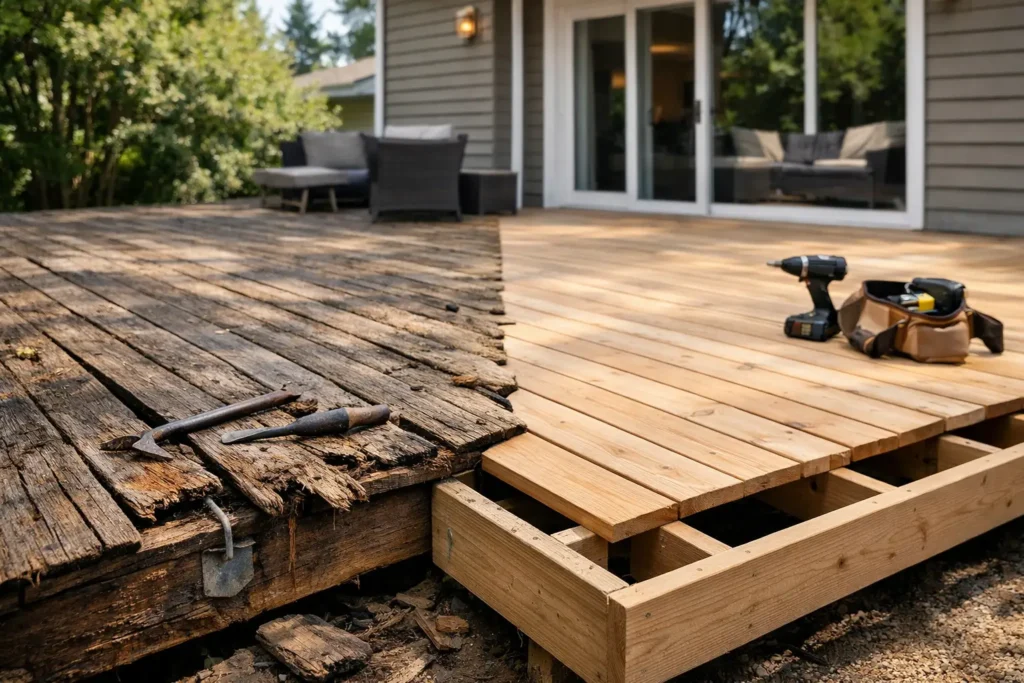
A deck replacement Seattle homeowners choose after years of rain, standing water, and seasonal temperature changes is rarely just a cosmetic project. Soft boards, wobbly railings, rusty hardware, and a ledger pulling away from the house can turn an outdoor gathering place into a safety concern. Replacing the deck is an opportunity to correct hidden problems, improve how the space works, and build for the Northwest weather rather than simply covering up damage.
The right decision starts with an honest assessment. Some decks can be repaired safely. Others have reached the point where investing in another round of patches only delays a larger, more expensive problem.
When Deck Replacement Makes More Sense Than Repair
Surface wear alone does not always mean a deck needs to be replaced. A few cracked boards, faded stain, or localized damage from a dropped grill may be addressed with targeted repair. The structure underneath tells the more important story.
Replacement is often the smarter path when rot has spread into joists, beams, posts, stair framing, or the connection between the deck and the home. In Seattle’s wet climate, moisture can remain trapped where deck boards meet framing, around fasteners, beneath planters, and near ground-level sections with limited airflow. What looks like a small soft spot on top can indicate broader deterioration below.
Watch for boards that flex excessively, railings that move when pushed, posts sitting directly in soil, visible fungal growth, cracked structural members, or fasteners that no longer hold securely. Water pooling against the house or beneath the deck deserves attention as well. Drainage problems can shorten the life of a new deck if they are not addressed during the project.
Age is not the only factor, but it matters. Older decks may have been built before current expectations for guardrail height, stair safety, footing depth, flashing, and structural connections. A replacement project gives homeowners a practical chance to bring the outdoor structure up to current standards while improving its appearance.
Deck Replacement in Seattle Starts Below the Deck Boards
The most visible choice is often the decking material. It is also the choice homeowners see every day. But a durable deck depends just as much on what is behind and below those finished boards.
A properly planned replacement considers footings, post bases, beams, joists, hardware, ledger flashing, drainage, and ventilation. These details are not glamorous, but they determine whether water has a path to escape and whether structural components remain protected over time. In a region where rain is part of normal life, skipping these details is an expensive shortcut.
The ledger connection deserves particular care. This is the point where an attached deck meets the house, and it must be flashed and fastened correctly to help prevent water intrusion and structural failure. If the existing deck has damaged siding, compromised flashing, or signs of water behind the ledger, those conditions should be identified before new materials cover them.
Ground-level decks require their own approach. Because air circulation is limited, moisture can linger beneath the deck and accelerate decay. Depending on the site, a contractor may recommend adjustments to grading, drainage, framing clearance, or the overall design. A slightly different elevation or layout can make a meaningful difference in long-term performance.
Choosing Materials for Northwest Weather
There is no single best deck material for every home. The right option depends on budget, maintenance expectations, sun exposure, design goals, and how the deck will be used.
Pressure-treated wood remains a practical structural material and can be a cost-conscious choice for decking as well. It has a familiar natural look, but it requires regular maintenance to help control moisture damage, checking, and weathering. Homeowners who enjoy maintaining a wood deck and want the character of real lumber may find it worthwhile.
Cedar offers natural beauty and is well suited to many Pacific Northwest homes. It is lighter and more stable than some wood options, but it still needs consistent care. Staining or sealing on schedule helps preserve its appearance and extends its useful life.
Composite decking appeals to homeowners who want lower routine maintenance and consistent color. It resists many of the problems associated with exposed wood, including splintering and frequent refinishing. However, composite costs more upfront, can become warm in direct summer sun, and varies widely in quality, texture, and warranty. The framing still needs to be built correctly, because low-maintenance deck boards do not make a poorly built structure durable.
Railings should be selected with the same practical mindset. Wood railings can match a traditional home, while metal balusters, cable systems, and composite railing packages can create a cleaner, more open view. A view-oriented deck in Bellevue or a smaller Seattle backyard deck may call for very different railing choices. The best option is one that meets safety requirements without making the space feel closed in.
Design the Deck Around How You Actually Live
A replacement is the right time to ask whether the existing footprint still serves the household. Many older decks are too narrow for a dining table, have awkward stairs, or leave no room for a grill without blocking the door. Expanding or reconfiguring the layout may add more everyday value than simply rebuilding the same shape.
Think through traffic before finalizing a plan. A deck used for weeknight dinners needs clear movement between the kitchen door, seating area, and grill. A family with children may prioritize wide, comfortable stairs and sturdy railings. Homeowners who entertain may want dedicated zones for dining and lounging rather than one crowded rectangle.
Privacy, shade, and year-round use can be part of the plan too. A pergola, privacy screen, bench, or covered section can make the deck more comfortable without requiring a major addition. These features need to be designed as part of the structure when possible, rather than treated as afterthoughts that may create drainage or attachment issues later.
Permits, Codes, and Clear Scope Matter
Deck replacement can involve permits and code requirements, particularly when changing the deck size, height, stairs, guards, or structural connection. Requirements can vary by jurisdiction, so homeowners should not assume that rebuilding an existing deck in the same location automatically avoids permit considerations.
A professional contractor should explain what the project includes, what conditions could affect the work, and how permit guidance will be handled. That clarity matters because deck pricing can change when hidden rot, unsuitable footings, drainage issues, or damaged house framing are discovered after demolition. No contractor can promise that concealed conditions do not exist, but a detailed bid and a thorough site review reduce guessing games.
Before signing a contract, make sure the scope identifies the demolition plan, framing materials, decking and railing selections, stair details, disposal, finish work, and any planned repairs around the house connection. Ask how change orders are handled if unforeseen conditions appear. A clear answer before work begins protects both the homeowner and the contractor.
Plan for the Work and the Weather
Deck construction is weather-aware work in the Seattle area. Rain does not stop every phase of a project, but wet conditions can affect demolition, excavation, concrete work, staining, and site access. A realistic schedule accounts for material lead times, permit timing when required, and conditions on the property.
Homeowners can help the project move smoothly by clearing furniture, planters, and personal items from the deck area, identifying outdoor outlets or irrigation lines, and discussing access needs before work starts. If the deck connects to a frequently used entrance, ask how that access will be managed during construction.
It is also wise to plan for the area beneath the deck. This space may be useful for storage, but only if drainage and access are considered. If it stays damp, it may be better treated as a ventilated maintenance area rather than enclosed storage. Enclosing a wet space without a proper system can create new moisture problems instead of solving old ones.
A Better Deck Is Built on Straight Answers
Deck replacement is a significant investment, and the lowest initial number is not always the lowest cost over the life of the deck. Material quality, framing details, drainage planning, code knowledge, and careful installation all affect how well the finished space performs through wet winters and busy summers.
Seattle Fence and Decks approaches replacement projects with detailed scope, practical material guidance, and a focus on one project at a time. If your deck has soft spots, unsafe railings, visible rot, or simply no longer fits the way you use your yard, call Kevin at (425) 449-6739 to schedule an onsite estimate. A straightforward evaluation can help you decide whether targeted repair is still sensible or whether it is time to build a deck you can count on for years.
Frequently Asked Questions
1. When should I replace my deck instead of repairing it?
Replace your deck when rot affects structural components, railings become unsafe, or water damage spreads across the framing. A professional inspection can help determine the right option.
2. How much does deck replacement cost in Seattle?
The cost depends on deck size, materials, structural repairs, and design. An onsite estimate can provide a more accurate price.
3. What is the best decking material for Seattle’s rainy climate?
Pressure-treated wood, cedar, and composite decking are popular options. The best choice depends on your budget, maintenance preferences, and weather exposure.
4. Do I need a permit for deck replacement in Seattle?
Permit requirements depend on the project’s size, height, location, and structural changes. Check local requirements before construction begins.
5. How long does deck replacement take?
The timeline depends on deck size, material availability, weather, and structural repairs. Hidden damage or permit requirements may extend the project.
6. Can I replace deck boards without replacing the frame?
Yes, if the existing frame, footings, and connections remain structurally sound. Have the structure inspected before replacing only the boards.
7. How can I make my new deck last longer in Seattle?
Ensure proper drainage, use suitable materials, protect structural connections, and follow recommended maintenance practices. Regular inspections can help identify early signs of damage.
For additional guidance on deck safety and building requirements, review the official City of Seattle construction and permit resources. Checking local requirements can help you plan your deck replacement project more confidently.