


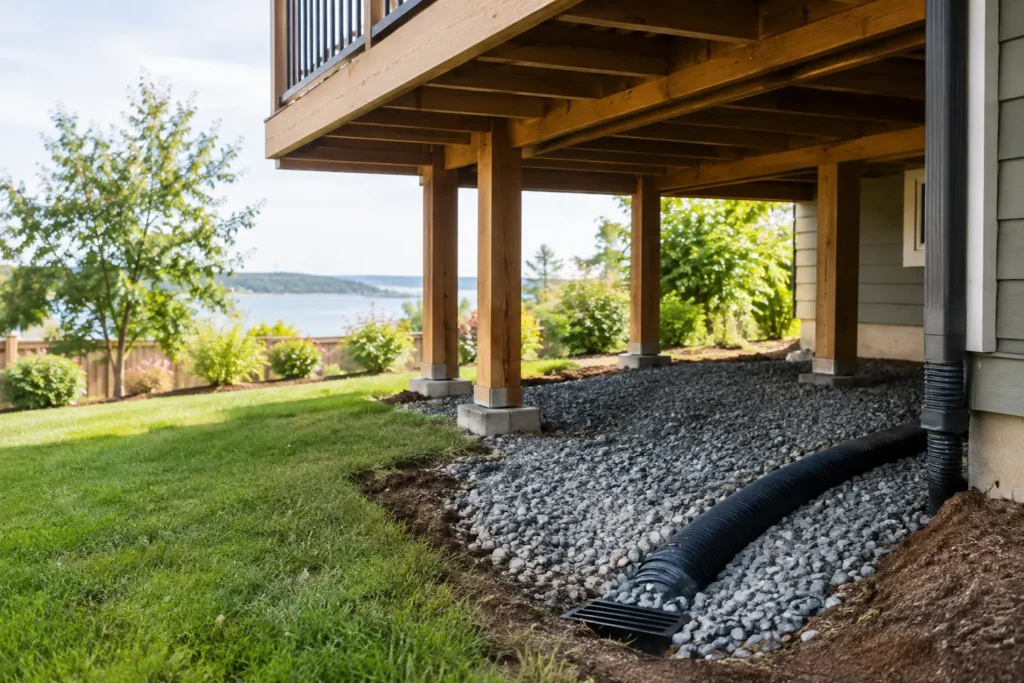
A deck can keep people out of the rain, but it should not trap that rain beneath the structure. For backyard drainage under deck Seattle homeowners need a plan that moves water away from the home, protects the framing, and keeps the lower yard from becoming a muddy, unusable space every winter.
Seattle-area soil, mature landscaping, sloped lots, and long stretches of wet weather can turn a small drainage weakness into a larger repair issue. The right solution depends on how the deck is built, where the house sits, and what you want to do with the area below it. There is no one-size-fits-all drain system, and a good installation starts by identifying where the water is coming from before choosing where it should go.
Why water under a deck becomes a problem
Rain falling through conventional deck boards is normal. The concern is what happens after it reaches the ground. If the soil is flat, compacted, or pitched toward the foundation, water can pool under the deck and stay there. That prolonged moisture encourages rot in wood components, contributes to musty conditions near crawlspace vents, and can soften soil around footings.
Water may also be arriving from places other than the deck surface. Roof downspouts, hillside runoff, leaking hose connections, and neighboring grades can all feed water into the same low area. Adding an under-deck ceiling without addressing those sources can hide the symptom while the ground below remains saturated.
A careful onsite review should look at the deck framing, post and footing locations, existing gutters, the grade around the foundation, and the intended use of the space. A storage area, patio, and planting bed each need a different level of water control.
Backyard drainage under deck Seattle homeowners can build on
The most dependable approach usually combines surface management, proper ground slope, and a controlled discharge point. Water should have a clear route away from the house rather than being released at the base of the deck or allowed to wander across compacted soil.
Start with the grade below the deck
Ground beneath a deck should generally fall away from the home. In many yards, this means reshaping the soil to create a gradual slope before gravel, pavers, or another finished surface is installed. The exact slope depends on site conditions, available elevation, and nearby structures, but the basic objective is simple: water should not sit against the foundation.
This work can be more involved than it looks. Deck posts, utilities, roots, retaining walls, and low property lines may limit where soil can be moved. On a tight Seattle lot, the practical answer may be a shallow swale or a drain system rather than extensive regrading. On a larger sloped property, managing uphill runoff before it reaches the deck may matter more than the ground directly below it.
Proper grading is an important part of backyard drainage under deck Seattle projects because it helps direct rainwater away from the foundation and reduces standing water.
Use gravel where it makes sense
A layer of clean drain rock under a deck often improves the area by reducing mud, allowing surface water to move through, and creating a cleaner finish. It is particularly useful under elevated decks that are primarily used for access, storage, or maintenance rather than outdoor living.
Gravel alone is not a drainage system, however. If the soil underneath is dense clay or the area has no outlet, water can still collect below the rock. Landscape fabric may help separate gravel from soil in some applications, but it must be selected and installed carefully so it does not interfere with intended drainage or become exposed at the edges.
For backyard drainage under deck Seattle properties, gravel can improve the surface beneath an elevated deck when it is combined with suitable ground preparation and a reliable drainage plan.
Add a French drain only when there is a real outlet
A perforated pipe set in washed drain rock can collect groundwater and direct it away from a wet area. This is commonly called a French drain. It can work well under or along the edge of a deck, especially where water consistently gathers in one low section.
The trade-off is that the pipe needs a place to discharge. Connecting it to an appropriate drainage route, daylighting it where site conditions allow, or tying it into an approved system requires planning. A drain that terminates too close to the house, a neighbor’s property, or a retaining wall simply moves the problem. Local requirements and site-specific conditions should be reviewed before changing drainage paths.
Keep roof water separate from under-deck runoff
Downspouts should not dump into the same area where deck water is already collecting. Extensions, solid drain lines, or other properly planned conveyance can carry roof runoff past the deck zone. This is especially important when a roof valley or upper-story gutter sends a high volume of water toward the backyard.
Separating these water sources makes the system easier to maintain. It also prevents a modest under-deck drainage issue from becoming a major overflow during a heavy storm.
For additional information, homeowners can review the Washington State Department of Ecology’s stormwater management guidance
When an under-deck drainage ceiling is the right choice
An under-deck drainage ceiling, sometimes called a deck drainage system, sits below the deck boards and channels water to a gutter at the outer edge of the deck. It is a strong option when homeowners want dry space below an elevated deck for a patio, outdoor furniture, storage, or a covered play area.
These systems do not replace proper site drainage. They keep rainfall from falling through the deck, but they do not solve water entering from the sides, flowing down a hillside, or pooling in the soil. The best results come when the deck-level system and ground-level drainage are designed together.
Installation details matter. The panels or troughs need the correct slope, the collection gutter needs a dependable outlet, and the deck framing must be in sound condition before anything is enclosed. Covering rotted joists, loose ledger connections, or failing fasteners creates a future repair problem that is harder and more expensive to reach.
For a new deck, planning this system during design is usually cleaner than adding it later. For an existing deck, a contractor should inspect the framing and identify repair needs first. Seattle Fence and Decks approaches drainage-related deck work with that full picture in mind: deck condition, water path, material durability, and the homeowner’s intended use of the space.
A well-planned backyard drainage under deck Seattle system may combine an under-deck ceiling with ground-level drainage to manage different sources of water.
Materials that hold up in Northwest conditions
The material below and around a deck should match the moisture exposure it will receive. Pressure-treated framing remains a practical choice for many decks, but proper flashing, spacing, fasteners, and ventilation are what help it perform over time. Composite decking reduces surface maintenance, yet water still passes through most composite deck board installations unless an under-deck system is added.
For a finished lower-level area, pavers can provide a more usable surface than loose gravel, provided the base is properly prepared and drainage is accounted for. Concrete may be appropriate in some locations, but it needs correct slope and careful consideration around existing footings, access, and drainage routes. Impervious surfaces can move water quickly, which is helpful only if the water has somewhere appropriate to go.
Do not overlook access for maintenance. A system with buried cleanouts, visible drain outlets, and room to inspect the perimeter will be easier to manage than one that disappears behind skirting and landscaping. Leaves, fir needles, moss, and sediment are facts of life in this region. Drainage components should be serviceable, not just installed.
Signs you should address drainage before deck repairs
A wet area under the deck does not always require a major drainage project, but certain signs deserve prompt attention. Look for standing water that remains days after rain, soft or sunken soil near posts, visible rot at the bottom of stairs or skirting, recurring moss on hardscape, or water collecting near crawlspace vents.
You may also notice deck boards cupping, fasteners lifting, or framing that feels soft when probed. Those conditions can result from several issues, but constant moisture beneath the deck often contributes. Repairing surface boards without correcting water exposure can shorten the life of the new work.
Before accepting a drainage proposal, ask where the water will enter the system, where it will exit, and how the installer will maintain slope around the foundation. A detailed fixed-scope bid should explain whether grading, gravel, drain pipe, downspout work, disposal, and restoration are included. Clear answers upfront help prevent change orders caused by assumptions about hidden site conditions.
A dry, stable area beneath your deck protects more than the view from the back door. It protects the structure supporting that view and gives you more usable space through the rainy months. If water is collecting under your deck, an onsite assessment can identify the source and map out a practical fix before another wet season adds to the damage. Call Kevin at (425) 449-6739 to schedule an onsite estimate for your next project.
Frequently Asked Questions
How do I stop water from pooling under my deck?
Start by identifying the source of the water and checking the ground slope beneath the deck. Depending on the site, regrading, gravel, a French drain, or an under-deck drainage system may help manage water more effectively.
Is gravel enough for drainage under a deck?
Gravel can reduce muddy conditions and improve the surface, but it may not solve standing water if the soil drains poorly or there is no suitable outlet. Proper ground preparation and drainage planning are important.
Does an under-deck drainage system prevent water from collecting in the yard?
An under-deck drainage system channels rainwater from the deck boards into a collection gutter. It does not automatically control groundwater, hillside runoff, or water entering from the sides, so ground-level drainage may also be necessary.
When should I hire a professional for under-deck drainage in Seattle?
Consider a professional assessment if water remains standing for days after rainfall, soil around deck posts becomes soft, water collects near the foundation, or you notice signs of wood rot. A professional can identify the source and recommend a suitable drainage solution.
1 Comment