


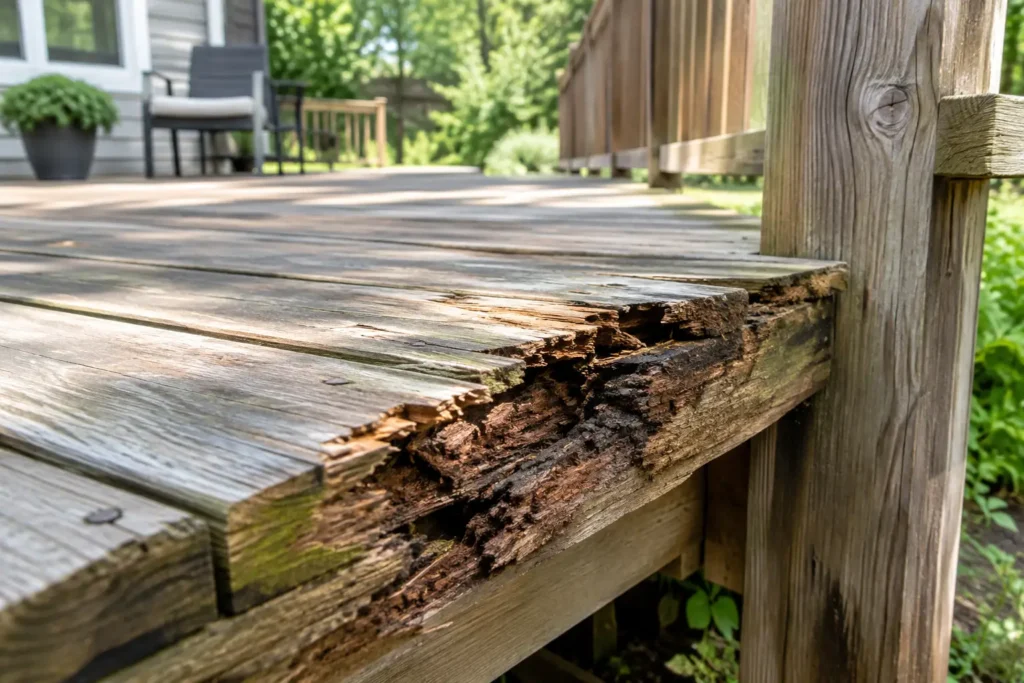
A deck rarely fails all at once. In the Pacific Northwest, rot often begins in a small, hidden area: beneath a planter, at the ledger board against the house, inside a post base, or where leaves have held rainwater against the framing.
Homeowners often ask, why do decks rot when the boards still look reasonably sound from above? The answer is usually prolonged moisture combined with a detail that prevents the wood from drying.
Rain is part of life in Seattle, Bellevue, and surrounding communities. A properly designed and maintained wood deck can handle it.
Rot takes hold when water repeatedly reaches the wood and stays there long enough for decay fungi to grow. Finding that moisture source early can mean a focused repair instead of a full deck replacement.
Why Do Decks Rot in the Pacific Northwest?
Wood rot is caused by fungi that feed on damp wood fibers. The fungus needs moisture, oxygen, a suitable temperature, and untreated or poorly protected wood.
Western Washington provides plenty of wet weather, but rain alone is not the whole problem. Decks rot when their design, installation, drainage, or maintenance allows water to remain trapped.
Pressure-treated lumber is more resistant to decay than untreated wood, but it is not invincible. Treatment can be cut away at drilled holes and notches, surface checking can expose vulnerable areas, and boards eventually weather.
Cedar has natural decay resistance, yet it also benefits from good ventilation, drainage, and regular protection. Material choice matters, but sound construction details matter just as much.
Water Has Nowhere to Go
The most common cause is standing or trapped water. Deck boards should shed water, with enough spacing between them for rain, pine needles, and small debris to pass through.
If gaps are clogged, water can sit on the framing below for days at a time.
Low spots can create the same problem. A deck surface that has sagged, boards installed too tightly, or a flat area around a post can all become small reservoirs.
Planters, outdoor rugs, storage bins, and furniture covers are also frequent culprits because they block airflow and keep the surface beneath them damp.
Poor Airflow Keeps Framing Wet
A deck needs air beneath and around it. Ground-level decks are especially vulnerable because the framing sits close to damp soil and receives little sun or wind.
If the area under the deck is enclosed without adequate ventilation, moisture can linger long after a storm has passed.
Dense vegetation can make the issue worse. Shrubs, vines, and low branches may look attractive around a deck, but they can restrict airflow and hold wet leaves against posts and joists.
A clear perimeter gives the structure a better chance to dry between rains.
Failed Flashing Lets Water Reach the House Connection
The ledger board is the framing member attached to the house. It carries a major portion of the deck load, which makes water intrusion here a safety issue as well as a rot issue.
Proper flashing directs water away from the connection between the deck and siding.
When flashing is missing, damaged, or installed behind the wrong layers of siding and weather barrier, rain can enter the wall assembly.
The visible deck boards may appear fine while rot develops behind the ledger, in the rim joist, or within the home’s exterior wall.
This is not a repair to guess at. A qualified deck contractor should inspect the connection, framing, fasteners, and surrounding siding before recommending a solution.
Posts and Beams Stay in Contact With Moisture
Deck posts are designed to transfer weight down to concrete footings. Problems begin when wood posts touch soil, sit directly on concrete, or are held in post bases that collect debris and water.
End grain at the bottom of a post absorbs moisture quickly, making it one of the first places decay can begin.
A proper post base lifts the wood above the concrete and allows water to drain away. Metal hardware should also be compatible with pressure-treated lumber.
Using the wrong fasteners or connectors can lead to corrosion, weakening a connection that may already be exposed to moisture.
Fastener Holes, Cuts, and Cracks Expose Wood
Every deck has penetrations: screws, bolts, railing connections, notches, and cuts at board ends. These areas are normal, but they need thoughtful installation.
Field-cut ends of pressure-treated lumber should be protected with an appropriate end-cut preservative. Without it, moisture can enter the most absorbent part of the board.
Cracks and checks in exterior lumber are also common. Not every surface crack means a board is structurally unsound.
The concern is whether the crack holds water, reaches deeply into the piece, or develops near a critical connection. A professional inspection helps separate normal weathering from a repair that cannot wait.
The Early Signs of Deck Rot
Rot is not always visible from the top of the deck. Look below the surface and around high-moisture areas at least once a year, preferably after the wet season.
Soft spots, a spongy feel underfoot, dark staining, flaking wood, mushroom growth, and boards that crumble when probed are warning signs.
Pay close attention to joist ends, beam tops, stair stringers, railing posts, the underside of deck boards, and the ledger connection.
Rusted hardware, loose railings, sagging sections, or screws that no longer hold can indicate that the wood beneath has deteriorated.
Do not rely on stain color alone. A freshly stained deck can still have concealed framing damage.
Likewise, gray weathered boards are not necessarily rotten. The condition of the structural framing, connections, and footings determines whether a deck remains safe to use.
Can You Repair a Rotted Deck or Does It Need Replacement?
It depends on where the decay is located and how far it has spread. Surface-level damage to a few deck boards may be a straightforward repair, particularly when the joists beneath are dry and structurally sound.
Replacing damaged boards, correcting drainage, and applying a quality water-repellent finish can extend the deck’s service life.
Structural rot is different. Decay in posts, beams, joists, stair supports, railings, or the ledger board can compromise the deck’s ability to carry people, furniture, grills, and snow loads.
In those cases, replacing only the visible boards does not solve the real problem.
A full replacement may be the better value when multiple framing members are affected, the existing layout traps water, or the deck no longer meets current safety expectations.
Replacement also creates an opportunity to improve the structure with better drainage, proper flashing, upgraded hardware, and materials suited to the way your household uses the space.
How to Prevent Deck Rot Before It Starts
Good prevention is practical, not complicated. Keep leaves, moss, and debris out of board gaps and away from posts.
Move planters and outdoor rugs occasionally so the deck can dry. Trim back vegetation, clean gutters that drain near the deck, and make sure downspouts carry water away from footings.
Inspect the deck after winter and again before the wet season. Check for loose railings, damaged flashing, soft wood, corroded connectors, and areas where water pools.
Clean the surface with a deck-safe product, then apply a compatible stain or water repellent when the wood is dry and weather conditions allow.
The right maintenance interval varies by exposure, wood species, finish type, and how much direct weather the deck receives.
For a new deck, prevention starts before the first board is installed. Proper footing depth, elevated post bases, flashing, drainage, board spacing, corrosion-resistant hardware, and adequate ventilation are not cosmetic details.
They are the parts of the job that determine whether the deck can dry out and perform well through years of Northwest rain.
When to Call a Deck Professional
Call for an assessment if you can push a screwdriver into framing wood, notice movement in the railing, see rot at the house connection, or find soft spots near stairs and posts.
Avoid loading a questionable deck with a hot tub, heavy furniture, or a large gathering until its structure has been evaluated.
Seattle Fence and Decks provides on-site estimates with clear, fixed-scope recommendations for deck repair and replacement.
The goal is simple: identify what is sound, explain what is not, and recommend work that addresses the source of the moisture instead of covering it up.
Call Kevin at (425) 449-6739 to schedule an onsite estimate for your next project.
A deck should be a dependable extension of your home, not a surface you second-guess after every rainy season.
Addressing small moisture problems while they are still small protects your investment and keeps the space safer for the people who use it.
What is the average lifespan of a deck?
A well-built and properly maintained deck can typically last 15 to 25 years, depending on the materials, climate, drainage, and maintenance.
How can I prevent my deck from rotting?
Keep the deck clean and dry, maintain proper drainage and airflow, protect exposed wood, and regularly inspect flashing, posts, fasteners, and other moisture-prone areas.
Why do people not like Trex decking?
Some homeowners dislike Trex because it can cost more upfront, retain heat in direct sunlight, or have a different look and feel compared with natural wood decking.
How much does it cost to fix a rotting deck?
The cost depends on how much of the deck is affected. Minor board repairs may be relatively inexpensive, while structural rot involving joists, posts, beams, or the ledger can require a much larger repair or replacement.