


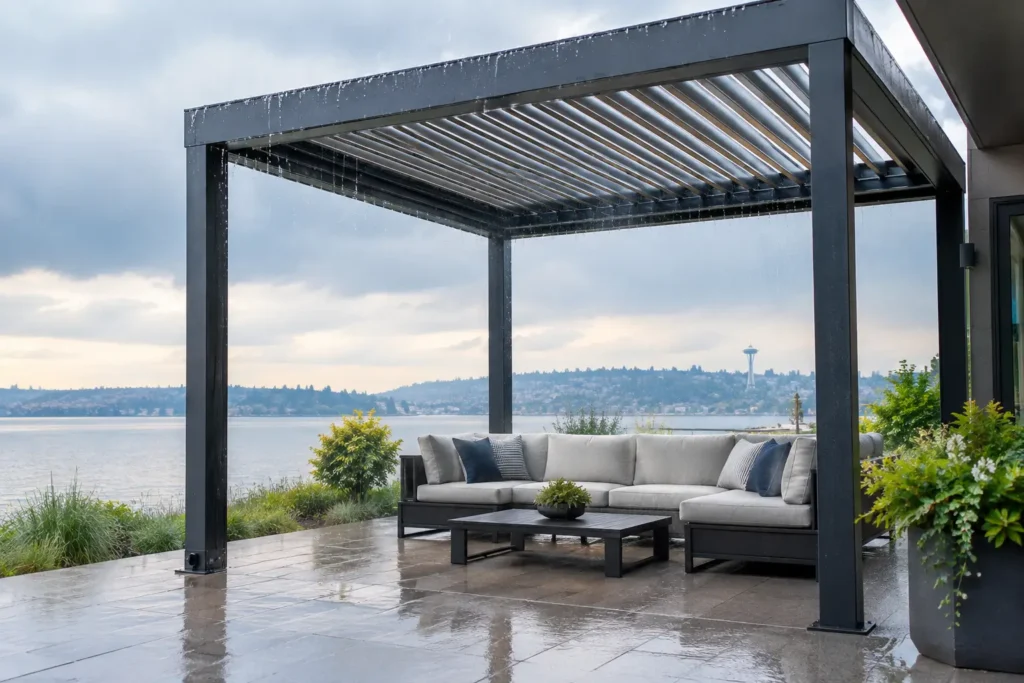
Seattle homeowners do not need another reason to stay indoors from October through May. Louvered pergola rain protection Seattle homeowners can count on starts with more than adjustable roof panels. It requires a system designed to close tightly, move water away from the structure, stand up to wind, and fit the deck or patio below it. When those details are handled correctly, a louvered pergola can turn a weather-dependent patio into a space for dinners, grilling, hot-tub use, and everyday outdoor time in nearly any season.
A standard open-slat pergola provides shade and visual appeal, but it does not solve the Northwest rain problem. A louvered pergola is different. Its rotating aluminum louvers can open for sunlight and airflow, then close to create a solid overhead surface during rain. The best results come from treating it as a complete outdoor roof system, not simply a decorative pergola with moving parts.
How Louvered Pergola Rain Protection in Seattle Works
When the louvers are closed, each panel overlaps the next and directs water toward integrated channels in the frame. From there, the water enters gutters built into the perimeter beams and travels down through concealed or coordinated downspouts in the posts. This is what keeps water from pouring off the roof edge onto your seating area, grill station, or deck steps.
The louver seal matters. Quality systems use engineered interlocking edges and gaskets to reduce drips between panels. That does not mean every louvered pergola creates the same dry experience. Systems vary in panel profile, gutter capacity, drainage layout, controls, and wind performance. A well-built unit should shed ordinary Seattle rain effectively when fully closed, but no overhead structure eliminates every drop during heavy, wind-driven storms.
That distinction matters for planning. If your goal is a dry dining table during steady rain, a properly designed louvered roof can be an excellent fit. If you want a fully enclosed, temperature-controlled room with no side exposure, you may need fixed walls, retractable screens, glass panels, or a more enclosed covered-deck design.
Homeowners can review the Seattle building code requirements to better understand applicable structural and safety regulations before installing an outdoor structure.
Rain Is Only One Part of the Design
Water needs somewhere safe to go after it leaves the louvers. On a deck, that may mean routing downspouts away from stairs, door thresholds, and areas where water could pool. On a patio, it may mean coordinating drainage with the existing concrete slope, landscaping, or a drain system.
Poor drainage can make an otherwise attractive pergola frustrating to use. Water discharged beside a foundation, onto a frequently used walkway, or against deck framing creates avoidable problems. During an onsite consultation, the roof location, existing drainage, grade, and nearby structures should all be evaluated before the final layout is chosen.
The Seattle Details That Make a Difference
Seattle’s wet climate puts materials and connections to the test. A louvered pergola should be selected and installed with year-round exposure in mind, especially where it connects to an existing deck, house, outdoor kitchen, or patio cover.
Aluminum is a common choice for the roof frame and louvers because it does not rot, twist, or require the recurring stain and seal schedule associated with wood. A powder-coated finish helps protect the surface and gives homeowners a range of colors that can coordinate with siding, railing, or trim. Still, the supporting structure below the roof must be just as carefully considered. Posts, footings, attachment hardware, and flashing all need to match the conditions of the site.
Wind is another factor. An open louvered roof can allow air through when conditions are calm, but a closed roof presents a larger surface to gusts. The post layout, footing size, fastening method, and manufacturer requirements should be based on the specific system and location. A pergola installed on an exposed hillside or near open water may need a different approach than one protected by neighboring homes and mature trees.
If the structure attaches to the home, proper flashing is not optional. The attachment point must keep water out of the wall assembly rather than creating a hidden leak path. For many homes, a freestanding design is the cleaner solution because it avoids roofline conflicts and gives more flexibility with placement. There is no universal right answer. The best choice depends on the house, deck, drainage, and how you plan to use the space.
Planning Louvered Pergola Rain Protection for Seattle Homes
Before choosing a model or color, start with the activity the pergola needs to cover. A small seating area has different requirements than a large outdoor kitchen with a BBQ station, dining table, and circulation around both. Measure the furniture you actually use, not just the open area of the patio.
Leave enough clearance for chairs to move, guests to walk through, and doors to open. Consider where smoke and heat from a grill will go when the louvers are closed. Many homeowners prefer an outdoor kitchen arrangement with a dedicated ventilation plan or a section that can remain open while cooking. Heater locations, ceiling fans, lighting, speakers, and privacy screens should also be decided early because electrical and structural needs are easier to address before installation.
The orientation of the roof changes how it feels throughout the day. Louvers can be angled to reduce direct sun while maintaining airflow, but the structure’s position still affects afternoon heat, glare, views, and privacy from nearby homes. In Bellevue, Kirkland, and Seattle neighborhoods with close property lines, an integrated screen or privacy wall may make the outdoor area far more useful without closing it off completely.
Manual, Motorized, and Smart Controls
Manual louver systems can work well for a smaller, straightforward patio where homeowners do not mind adjusting the roof by hand. Motorized systems are more convenient for larger installations, especially when the roof is used daily or paired with lighting and heaters. With a remote or wall control, you can close the louvers quickly when rain starts and open them again when the weather clears.
Rain and wind sensors are worth discussing, but they are not a substitute for sound construction or homeowner awareness. A rain sensor can close a motorized roof when showers begin. A wind sensor may open or position louvers according to the manufacturer’s safety guidance during strong gusts. Sensor reliability, electrical access, and the system’s recommended operating limits should be clear before you decide which features are worth the added cost.
What a Louvered Pergola Will and Will Not Do
A louvered roof gives you control that a fixed cover cannot. Open the panels for fresh air, tilt them for filtered light, or close them during rain. That flexibility is the main benefit, and it can make a deck or patio useful more months of the year.
However, it does not make an uncovered backyard into an enclosed room. Rain blowing in from the sides can still reach furniture and flooring. Cold air remains cold air. If your deck sits under large trees, leaves, needles, and pollen will require regular cleaning from the louvers and gutters. In freezing conditions, homeowners should follow the system manufacturer’s guidance and avoid forcing louvers that are obstructed by ice.
Maintenance is generally modest, but it should not be ignored. Periodically clear debris from the gutter paths, rinse the frame, inspect downspout outlets, and keep the louver tracks free of buildup. For motorized systems, confirm that controls, sensors, and wiring are operating properly before the wet season. A contractor should also explain where water exits the structure so you know what to inspect after a major storm.
Build It Around the Existing Deck or Patio
A louvered pergola can be installed over a new deck, an existing deck, or a ground-level patio. The existing surface must be evaluated honestly. If a deck has rot, undersized framing, movement, or deteriorated connections, adding a substantial overhead structure before repairs can compound the problem. In some cases, replacing or reinforcing the deck first is the safer, longer-lasting investment.
Post placement also affects the deck below. Posts should not block a primary path, crowd a doorway, or land where framing cannot adequately support the load. On a patio, footings may need to extend below the surface to provide a stable base. A detailed scope of work should identify the pergola system, post locations, drainage plan, electrical work, demolition or repairs, and any permit-related responsibilities. That is how homeowners avoid assumptions that turn into change orders later.
Seattle Fence and Decks approaches these projects with a climate-informed design process and a detailed fixed-scope bid, so the structure, drainage, and supporting deck or patio are considered together. Call Kevin at (425) 449-6739 to schedule an onsite estimate and discuss the rain protection your outdoor space actually needs.
The most useful louvered pergola is not necessarily the largest or most feature-packed one. It is the one that drains correctly, fits the way your household gathers, and is built on a foundation that will still be dependable after years of Seattle rain.
Enjoy peace of mind knowing that your outdoor experiences are safeguarded by louvered pergola rain protection Seattle.
Experience unparalleled protection with louvered pergola rain protection Seattle in your outdoor living area.
Consider louvered pergola rain protection Seattle for your next home improvement project.
With proper louvered pergola rain protection Seattle, outdoor spaces can be enjoyed all year.
Explore the benefits of louvered pergola rain protection Seattle to enhance your outdoor gatherings.
Investing in louvered pergola rain protection Seattle can increase the functionality of your outdoor space.
Each louvered pergola rain protection Seattle unit is designed to withstand the unique challenges of the Seattle climate.
Opting for louvered pergola rain protection Seattle is a smart choice for enhancing your home’s exterior.
With louvered pergola rain protection Seattle, you can extend your outdoor season despite the rain.
Enjoy the versatility and functionality of louvered pergola rain protection Seattle in your outdoor living space.
Don’t let Seattle’s weather dictate your outdoor plans; invest in louvered pergola rain protection Seattle today.
Installing louvered pergola rain protection Seattle can transform your patio into a year-round retreat.
To maximize your outdoor enjoyment, explore options for louvered pergola rain protection Seattle that fit your lifestyle.
Choosing louvered pergola rain protection Seattle allows for more versatile outdoor designs that adapt to weather conditions.
For Seattle residents, louvered pergola rain protection Seattle serves as a vital investment for any outdoor space.
The integration of louvered pergola rain protection Seattle into your home design can dramatically improve outdoor comfort.
Many homeowners in Seattle are discovering the advantages of louvered pergola rain protection Seattle for enhancing their outdoor experiences.
Investing in louvered pergola rain protection Seattle ensures your outdoor gatherings remain enjoyable year-round.
The effectiveness of louvered pergola rain protection Seattle systems is enhanced by proper installation and quality materials.
With louvered pergola rain protection Seattle, homeowners can enjoy their outdoor spaces even in inclement weather.
Opting for louvered pergola rain protection Seattle offers not only aesthetic benefits but also practical solutions for outdoor living.
1 Comment