


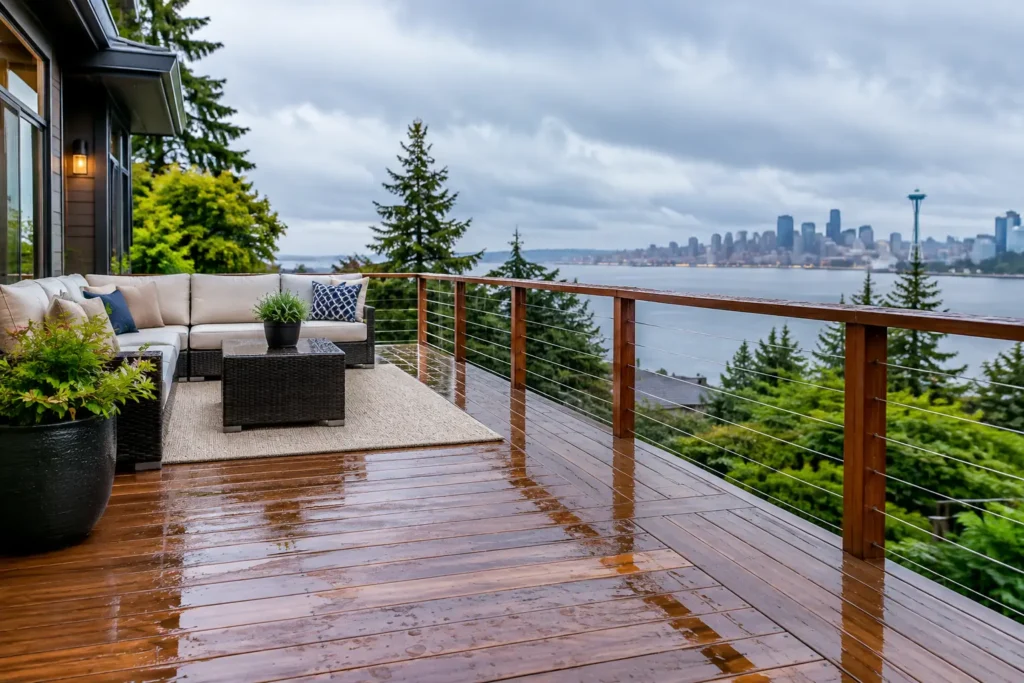
A Seattle deck rarely fails because of one hard storm. It fails after years of wet leaves held against the boards, splashback at the door, shaded corners that never fully dry, and water working into neglected framing. Choosing the best decking for Seattle rain means looking beyond the surface color or initial price. The board material matters, but so do drainage, airflow, fastening details, and the condition of the structure underneath.
For many local homeowners, capped composite offers the best balance of moisture resistance, maintenance, appearance, and long-term value. It is not the automatic answer for every property, though. A covered porch, a view deck with intense afternoon sun, a historic home, or a tighter renovation budget can point to a different material choice.
Best decking for Seattle rain: start with water management
Seattle’s climate is demanding because decks stay damp for long stretches. A material that handles a brief downpour may still perform poorly when it is regularly shaded, covered in fir needles, or located beneath trees that limit airflow. That is why a good deck design treats water as a construction detail, not just a maintenance issue.
Deck boards need appropriate spacing so rain can drain through rather than sit on the surface. Framing should be protected where practical, especially along joist tops and connection points. The deck should also have enough clearance and ventilation underneath to dry after wet weather. If the area below stays dark, muddy, and still, even premium decking will not correct the larger moisture problem.
Before selecting a board, assess the existing structure. If joists are soft, hardware is corroded, posts are compromised, or the deck is undersized for current code requirements, installing new boards alone is not a lasting repair. A detailed on-site assessment prevents the familiar cycle of covering a failing deck and paying to rebuild it again a few years later.
Capped composite: the practical all-around choice
Capped composite decking combines a composite core with a protective outer shell. For Seattle-area homes, that shell is the key benefit. It helps resist surface moisture, staining, fading, and the persistent mildew growth that can make natural wood difficult to maintain in heavily shaded yards.
Capped composite does not need regular staining or sealing, which is a meaningful advantage for homeowners who want to use their deck rather than schedule another exterior maintenance project. Routine cleaning still matters. Pollen, moss, soil, and wet organic debris should be removed so the surface can dry and remain slip-resistant. But the upkeep is generally simpler and more predictable than with wood.
The trade-off is cost. Quality composite materials cost more upfront than pressure-treated lumber, and installation details matter. Boards expand and contract with temperature changes, so proper gapping, approved fasteners, and manufacturer-specific installation practices are necessary. Some early-generation composites also had a noticeably artificial appearance, but current capped products offer more natural grain patterns and color variation.
For a family deck, entertaining space, or backyard platform exposed to regular rain, capped composite is often the strongest long-term value. It is especially well suited to homeowners replacing rotted wood and looking for a lower-maintenance solution.
For homeowners comparing the best decking for Seattle rain, capped composite is worth considering because it offers moisture resistance with less routine maintenance than natural wood.
Choose texture with traction in mind
Decking that looks smooth and modern in a showroom may become slick when wet. This does not mean every textured board is safer in every condition, but surface texture deserves attention when selecting a product. Steps, landing areas, pool-adjacent decks, and entries used throughout winter should receive particular consideration.
Color also affects maintenance. Very dark boards can show pollen and water spotting, while very light boards may reveal dirt and leaf stains. Mid-tone browns and weathered gray shades often fit the Pacific Northwest landscape while being more forgiving between cleanings.
Pressure-treated wood: affordable, but maintenance-dependent
Pressure-treated lumber remains a practical decking option when budget is the primary concern. It is widely available, repairable, and familiar to most homeowners. When installed correctly and maintained consistently, it can provide years of service.
The limitation is that pressure treatment does not make wood maintenance-free. Seattle rain can lead to checking, splintering, cupping, mildew, and surface deterioration if boards are left unprotected. A wood deck needs time to dry after installation, followed by a quality stain or water-repellent finish on a regular schedule. The exact timing depends on the product, exposure, and wear, but skipping maintenance is what shortens its useful life.
For additional information about wood durability and moisture protection, homeowners can consult the USDA Forest Products Laboratory’s Wood Handbook.
Pressure-treated decking can make sense for a straightforward ground-level deck, a rental property, or a project where the homeowner is comfortable with periodic care. It is also a reasonable choice when a future expansion or redesign is likely. Just be realistic about the ongoing commitment. The lowest initial material price is not always the lowest cost over ten or fifteen years.
Although pressure-treated lumber can be budget-friendly, choosing the best decking for Seattle rain also means considering long-term maintenance and weather exposure.
Cedar and hardwood: natural beauty with different demands
Cedar has a classic Northwest appearance and a natural resistance to decay. It is lighter in weight than many alternatives and can look excellent beside older Seattle homes, gardens, and custom fences. Its soft grain, however, is more vulnerable to dents, wear, and weathering than composite or hardwood.
A cedar deck needs regular cleaning and refinishing to preserve its color and reduce moisture absorption. Left untreated, it will weather to gray. Some homeowners like that aged appearance, while others prefer the warm tone of fresh cedar. Neither choice is wrong, but a homeowner should decide before the project starts because maintaining color requires continued effort.
Tropical hardwoods and other dense natural woods offer exceptional durability and a refined appearance. They can perform well in wet conditions when properly detailed, but they come with a higher material and labor cost. Dense boards require specialized installation practices, and they still benefit from cleaning and finishing. This option is best for homeowners who specifically want real wood and are prepared for the investment and care that come with it.
PVC decking: excellent water resistance at a premium
PVC decking contains no wood fiber, making it highly resistant to moisture and rot. For decks near heavy tree cover, waterfront conditions, or areas that remain wet for extended periods, it can be an excellent option. It is also lighter than many composite products and generally easy to clean.
Its disadvantages are primarily price and feel. PVC often costs more than composite, and some homeowners prefer the more substantial feel and visual depth of a high-quality capped composite board. Heat buildup can also be a consideration on sunny, south- or west-facing decks, particularly with darker colors. A material sample viewed outside at the property is more useful than a showroom decision alone.
PVC is another option to compare when evaluating the best decking for Seattle rain, particularly for homeowners prioritizing moisture resistance.
The framing beneath the deck matters just as much
A new deck surface cannot make weak framing safe. In the Seattle area, older decks commonly show rot where joists meet the ledger, where posts contact wet soil, and where water collects around fasteners. The ledger connection to the home is particularly important. It must be properly flashed and securely attached to protect both the deck and the house.
For a replacement project, inspect the entire support system before choosing boards. New framing may need current code-compliant hardware, correct post bases, upgraded railings, safer stair geometry, or better footings. These details are not extras. They are part of building a deck that performs through wet winters and everyday use.
Joist protection tape is also worth discussing for new construction or reframing. Applied along the tops of joists and beams before the decking goes down, it helps limit water exposure at one of the framing’s most vulnerable surfaces. It adds cost, but it can be a sensible preventive measure in a rain-heavy climate.
Design choices that keep a deck drier and safer
Material selection works best when paired with sensible design. Avoid trapping leaves and water in narrow spaces around planters, walls, and built-in benches. Provide clear paths for runoff. Where a deck sits close to the ground, plan for drainage below it rather than assuming water will disappear on its own.
Covered areas can extend the useful season, but a roof or pergola changes how water moves across the property. Gutters, downspouts, and roof runoff need a planned destination so they do not discharge against the deck footing area. For homes with persistent shade, a modestly sized deck that can dry may be a better investment than a larger one with chronically damp corners.
Railings and lighting deserve the same practical approach. Durable railing materials, code-appropriate spacing, sturdy handrails, and well-lit stair treads make a deck easier to use on dark winter afternoons. A deck should feel dependable in November, not only look good in July.
Make the choice based on the whole project
The best board for one Seattle property may not be the best board for another. Capped composite is usually the strongest choice for homeowners seeking low maintenance and reliable wet-weather performance. Pressure-treated lumber works when cost and repairability lead the decision. Cedar and hardwood suit homeowners who value natural wood and accept regular care, while PVC is worth considering where maximum moisture resistance is the priority.
The right answer becomes clearer after looking at the deck’s
exposure, drainage, framing condition, intended use, and budget together. Seattle Fence and Decks provides on-site estimates with clear material options and a defined project scope, so homeowners can make that decision without guessing games. Call Kevin at (425) 449-6739 to discuss a deck built for the way your property handles rain, shade, and year-round outdoor living.
1 Comment