


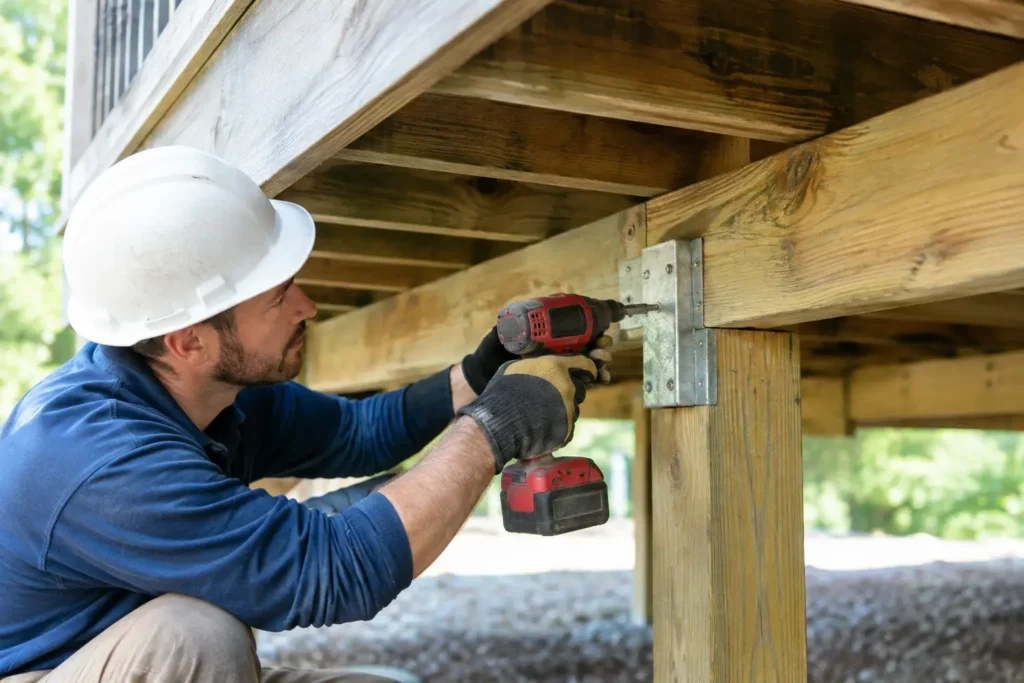
A deck beam that has started to sag is not a cosmetic problem. It is a warning that the framing below your deck is no longer carrying weight as intended. To repair sagging deck beams correctly, the cause has to be identified before new lumber, posts, or fasteners are installed. Covering the symptom without correcting the structural issue can leave the deck unsafe and lead to a more expensive rebuild later.
In the Seattle area, persistent rain, wet soil, aging pressure-treated lumber, and drainage problems all contribute to beam and post failures. A careful inspection determines whether a targeted repair is reasonable or whether the deck needs more substantial structural work.
What a Sagging Deck Beam Can Tell You
A beam may look bowed, but the problem is not always the beam itself. Deck framing works as a system: decking transfers weight to joists, joists rest on beams, beams are supported by posts, and posts depend on stable footings. Weakness at any point can make the beam appear to sag.
A slight, consistent crown in older lumber is not automatically a structural failure. A noticeable downward curve, however, especially one that is worsening or paired with bouncy decking, deserves prompt attention. Look for gaps where joists meet the beam, deck boards that slope toward the house, loose railings, cracked connections, or doors that no longer open smoothly from the deck.
The more concerning signs are soft or darkened wood, fungal growth, peeling hardware, standing water around posts, and beams that have split along their length. If the deck supports a roof, a hot tub, an outdoor kitchen, or a large gathering area, do not assume it can safely carry that additional load while repairs are being planned.
The Most Common Causes of Beam Sagging
Rot and moisture damage
Wood decay is a frequent cause in the Pacific Northwest. Pressure-treated lumber resists decay, but it is not immune to poor drainage, trapped debris, failed flashing, or repeated ground contact. Water can enter at bolted connections, beam splices, unprotected end grain, and places where multiple members are tightly sandwiched together.
A beam can look acceptable from the outside while decay has weakened the interior or the area around a connection. Probing suspect wood with a screwdriver can reveal soft spots, but a professional inspection is the better choice when the framing is elevated, concealed, or visibly compromised.
Settled or undersized footings
A sound beam will sag when one or more supporting posts settle. This may happen when a footing is too shallow, too small for the load, placed on disturbed soil, or installed without proper drainage. In our wet winters, soil movement and pooling water can expose weaknesses that were not obvious during dry weather.
A post sitting directly on soil, a patio block, or a deteriorated concrete pad is not a dependable long-term foundation for a deck. Posts should transfer loads through appropriate bases and footings designed for the site and local requirements.
Inadequate beam size or poor framing details
Sometimes the beam was undersized from the day it was built. Long spans without enough posts, improperly joined beam sections, missing hardware, or a change in how the deck is used can all overload a beam. Adding a roof cover, enclosed room, heavy planters, or a hot tub to an existing deck requires a new structural review. What worked for an open sitting deck may not work under a much heavier load.
Improper notching and drilling can also reduce a beam’s capacity. A repair should never rely on adding random blocks or a thin board alongside a failing member without confirming how the load will be supported.
How Professionals Repair Sagging Deck Beams
The repair sequence matters as much as the replacement materials. Work usually begins by evaluating the deck’s attachment to the house, framing spans, beam condition, post connections, footings, and drainage. The contractor then determines whether the existing beam can be reinforced or needs replacement.
Before the damaged beam is removed or adjusted, the deck must be supported with properly placed temporary shoring. This is not a job for a car jack and a few scrap boards. Lifting a deck too quickly can crack finishes, damage the house connection, or shift framing. The goal is to stabilize the structure and, when appropriate, carefully bring it back toward level before permanent supports are installed.
If the beam is structurally sound but insufficient for its span, adding engineered support or a properly sized sister member may be possible. This option depends on the beam’s condition, available bearing points, and the ability to create solid connections. It is not appropriate when rot is widespread or when the existing beam has significant splitting.
When replacement is necessary, the damaged beam is removed in controlled sections while the deck remains shored. New material should be sized for the actual span and load, including any roof structure or special features above. Proper corrosion-resistant connectors, bolts, and post caps are then used to create secure load paths. For Seattle-area decks, hardware selection matters because constant moisture can corrode ordinary fasteners over time.
Posts and footings must be repaired at the same time if they caused the sag. A new beam installed on a settled post simply repeats the problem. That may mean replacing rotted posts, adding support posts to reduce span, or installing new concrete footings below the required depth and on stable bearing soil.
When a Repair Is Not the Best Investment
A focused beam repair makes sense when the damage is isolated and the rest of the deck has good framing, sound footings, and safe connections. It can extend the life of a well-built deck without requiring a full replacement.
Replacement becomes the more practical option when rot extends through joists and posts, the deck is poorly attached to the home, multiple footings have failed, or the structure no longer meets reasonable safety expectations. A deck that is near the end of its service life may need repeated repairs if only the most visible problem is addressed.
This is where a detailed, fixed-scope assessment helps. Homeowners deserve to know whether they are paying for a repair that will last or applying a short-term patch to a deck that needs a larger plan. The lowest initial bid is not always the lower-cost choice if the underlying drainage, framing, and support issues remain in place.
Do Not Overlook Drainage and Prevention
After the structural repair, protect the new work from the conditions that caused the failure. Direct roof runoff away from posts and footings. Keep soil and mulch below wood framing. Clear leaves from between deck boards and away from beam connections, where wet debris holds moisture against the lumber.
Make a habit of inspecting the underside of your deck each spring and fall. Pay close attention to post bases, flashing, hardware, the beam’s lower edge, and any area below planters or hose spigots. Catching early decay or settlement can turn a major repair into a manageable maintenance project.
When to Call for a Deck Inspection
Stop using the deck for large gatherings if the beam has a pronounced dip, posts are leaning, connections are pulling apart, or the deck feels unstable underfoot. These conditions warrant a professional evaluation before more weight is added. Permit and code requirements can also apply when structural members, footings, or deck configuration are changed.
Seattle Fence and Decks provides on-site evaluations with straightforward recommendations for homeowners who need clarity on a sagging deck. Call Kevin at (425) 449-6739 to schedule an estimate. A well-planned repair should leave you with more than a level deck – it should give you confidence that the structure below it is built to carry the years ahead.