

A fence that looks right from the backyard can create a problem from the street. In Bellevue, fence height, location, visibility, and the way a fence relates to a retaining wall can all affect whether the finished project meets local requirements. Understanding Bellevue fence height rules before materials are ordered helps prevent redesigns, neighbor disputes, and the cost of correcting work after installation.
For most homeowners, the question is not simply, “Can I build a six-foot fence?” The better question is, “Where does the fence sit on my lot, how is its height measured, and are there site conditions that change the standard?” Those details matter on sloped lots, corner properties, homes near intersections, and properties with easements or existing retaining walls.
Bellevue Fence Height Rules: Start With the Yard
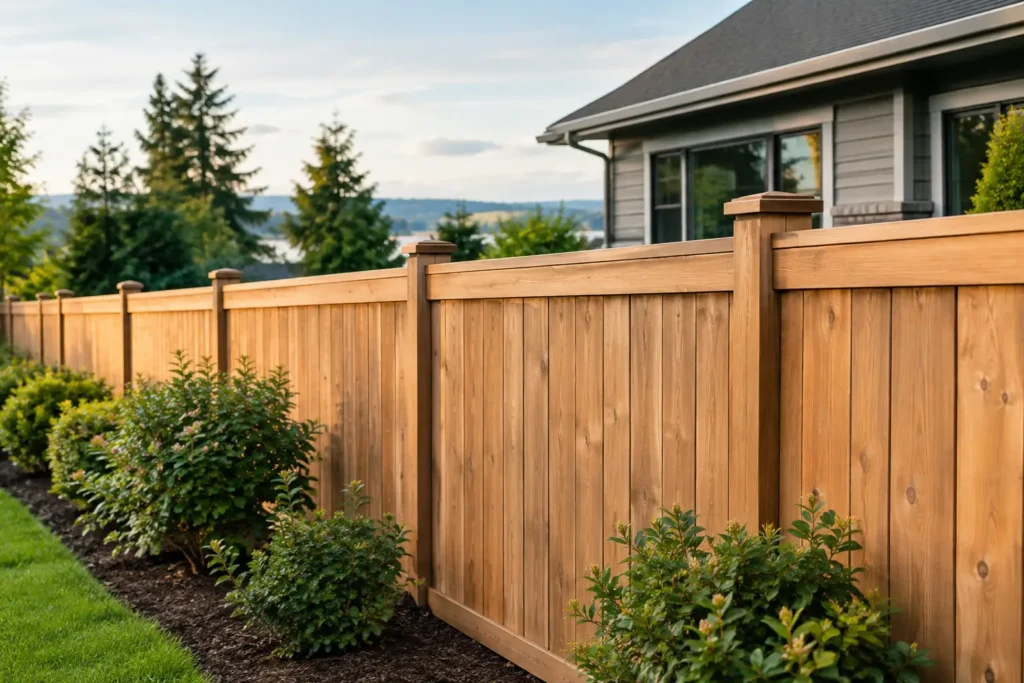
Bellevue fence height rules generally depend on whether the fence is in the front yard or in a side or rear yard. A six-foot privacy fence is commonly appropriate along side and rear property lines, while front-yard fences are typically limited to a lower height. Four feet is a practical starting point for planning a front-yard fence, although the applicable limit should always be confirmed for the property and zoning designation before construction begins.
That difference exists for good reason. A taller fence behind the home provides privacy where families spend time on patios, decks, and lawns. Near the street, lower fencing preserves neighborhood visibility, sightlines, and the open appearance of the public right-of-way.
Do not assume the front of the house is the only front-yard condition. On a corner lot, the yard that faces the side street may be treated differently than an interior side yard. A fence that would work along a typical side property line can be too tall near a street-facing setback or intersection.
Height Is Measured From the Ground
Fence height is not always as simple as the length of the fence board. Local requirements generally measure height from the finished grade on the applicable side of the fence. That becomes especially relevant when a property slopes or when the fence is installed above a wall.
A gradual step-down fence often looks better and can help keep each section within the allowed height. It also avoids the awkward appearance of one level fence line crossing a steep grade. On a sloped Bellevue lot, a contractor should establish the grade and layout before setting posts, not after panels are already in place.
Retaining walls require even more care. A retaining wall may be allowed at one height, and a fence above it may be allowed at another, but the combined structure can trigger a different review or safety requirement. A six-foot fence placed on top of a four-foot retaining wall is not a routine fence project. The wall, drainage, structural design, and total visible height all need to be evaluated together.
Corner Lots and Driveway Visibility
Corners are where otherwise straightforward fence plans often need adjustment. A fence, hedge, gate, or decorative feature that blocks a driver’s view of pedestrians, cyclists, or approaching vehicles can create a safety issue. Bellevue may apply sight-distance requirements near intersections and driveways, limiting the height or placement of structures within the visibility area.
This is one reason solid privacy fencing should not be designed only from the backyard view. The fence may need to step down, stop short of a corner, or transition to a more open style near the street. A lower picket fence, open metal panel, or carefully placed landscape screen can preserve the boundary without blocking visibility.
The same consideration applies to a driveway. If a gate or fence return is close to the drive entrance, make sure it does not interfere with drivers pulling out, mail delivery, garbage collection, or emergency access. A few feet of thoughtful layout can make the property safer and more functional every day.
When Permits and Extra Review May Apply
A standard residential fence is not always a permit-heavy project, but homeowners should not treat every fence as exempt from review under Bellevue fence height rules. Permit needs and other approvals can change based on the fence height, wall height, location, property conditions, and whether the project includes additional work.
Extra attention is warranted when a project involves any of the following:
- A retaining wall, especially one supporting soil, a driveway, or a fence above it
- A steep, uneven, or recently altered grade
- A fence near a public street, intersection, sidewalk, or driveway sight area
- Work in an easement, drainage tract, critical area, or utility corridor
- A property with homeowners association rules, plat restrictions, or recorded covenants
An HOA can be more restrictive than city code. It may dictate fence material, color, style, gate location, or maximum height. City compliance does not override private community rules, so it is best to review both before committing to a design.
Utilities are another practical concern. Fence posts can conflict with underground gas, electric, water, communications, or irrigation lines. Calling for utility locating before digging is a basic part of responsible fence installation. It protects the homeowner, the crew, and the utility infrastructure that serves the property.
Property Lines Matter as Much as Fence Height
A fence can meet height requirements and still create a costly issue if it is built on the wrong side of the property line. Existing fences are not always accurate indicators. They may have been installed for convenience, built by a prior owner, or placed inside the lot line to avoid a neighbor’s tree roots or utility equipment.
If the line is uncertain, review the recorded survey or consider having the boundary professionally located. This is particularly worthwhile before building a long privacy fence, replacing shared fencing, or installing expensive materials such as horizontal cedar, steel-framed panels, or masonry columns.
Talk with the neighbor early when a fence will run along a shared boundary. A straightforward conversation about height, style, access, and who will maintain which side can avoid frustration later. No homeowner wants to finish a project only to learn that a gate swings into the wrong area or that a neighbor expected a different arrangement.
Choose a Fence That Works in Bellevue Weather
Code sets the limits, but material selection determines how the fence performs over time. Bellevue’s rain, moisture, and winter wind put pressure on posts, fasteners, rails, and the bottom edges of fence boards. A design that is technically allowed but poorly built can lean, rot, warp, or fail long before it should.
Wood fences need ground clearance so boards are not constantly wicking moisture from soil or mulch. Posts need suitable depth, stable concrete work, and careful drainage around the base. Cedar remains a strong choice for privacy and appearance, but it still benefits from good spacing, quality fasteners, and a design that allows wet materials to dry.
Vinyl and composite fencing can reduce maintenance, but those materials have their own requirements for post reinforcement and expansion. Metal fencing offers visibility and durability, which can make it a smart fit near driveways or corner areas where a solid six-foot wall would not be appropriate. The best choice depends on the privacy goal, the exposure to wind, the lot grade, and the look of the home.
Plan the Fence Before You Price It
A dependable fence estimate should account for more than the number of linear feet. It should identify the intended height, material, post spacing, gates, terrain changes, demolition of the old fence, hauling, and any special conditions such as retaining walls or tight access. Detailed scope work prevents guessing games once construction is underway.
Before requesting bids, walk the lot and note where privacy is most needed, where water collects, where gates should go, and whether the existing fence line appears to match the property boundary. Bring up any concerns about HOA rules, drainage, corner visibility, or uneven grade during the onsite visit. Those are planning items, not afterthoughts.
A properly designed fence should give you privacy without creating a code issue, close off a view without closing off safe access, and stand up to the Northwest weather without constant repair. For a clear, fixed-scope fence plan in Bellevue, Seattle Fence and Decks can review the site and explain the practical options before work begins. Call Kevin at (425) 449-6739 to schedule an onsite estimate and build the fence your property needs, not just the tallest one that fits.