


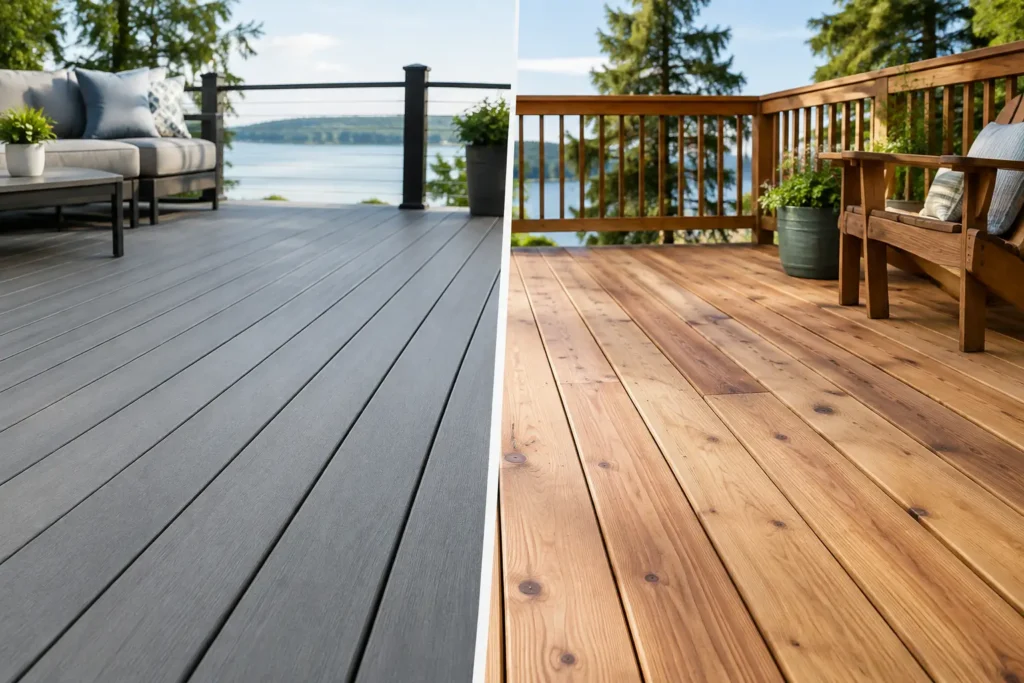
A deck in the Seattle area spends much of its life wet. Rain, shaded yards, windblown debris, moss, and long stretches without direct sun can turn a material decision into a maintenance decision fast. When homeowners ask about composite versus cedar decking, the right answer is not simply which material is better. It is which material fits the way you use your deck, how much upkeep you want, and the condition of the structure beneath it.
Cedar remains a classic Pacific Northwest choice because it looks natural, feels warm underfoot, and can be repaired board by board. Composite has earned its place because it reduces routine maintenance and handles moisture exposure more consistently. Both can make an excellent deck when installed correctly with proper framing, drainage, spacing, and ventilation.
Composite Versus Cedar Decking in Northwest Weather
Seattle’s climate is demanding on any exterior surface. Deck boards repeatedly absorb moisture, dry slowly in shaded areas, and collect organic debris. The visible decking matters, but the hidden structure matters just as much. A new composite surface installed over deteriorated joists or poor drainage will not solve a rotting-deck problem.
Composite decking is made from a blend of recycled wood fiber and plastic, often protected by an outer cap. That cap resists moisture absorption, staining, fading, and surface wear better than traditional wood. Quality composite boards do not need staining or sealing, which is a major advantage for homeowners who would rather spend weekends using their deck than maintaining it.
Cedar is naturally resistant to decay and insects, but it is still real wood. It benefits from periodic cleaning, sealing, and staining to maintain its color and slow weathering. Left untreated, cedar typically fades to a soft gray. Some homeowners like that look. Others prefer the original warm tone and should plan for ongoing care.
The practical distinction is simple: composite limits the work required to keep a deck looking consistent, while cedar rewards regular maintenance with a natural appearance that many homeowners still prefer.
Cost: Upfront Price Versus Long-Term Ownership
Cedar usually costs less than premium composite decking at installation, though prices vary by board grade, profile, railing choice, site access, and the amount of framing repair required. For a straightforward deck replacement with a controlled budget, cedar can be a sensible material choice.
Composite costs more up front. The boards, concealed fasteners, trim pieces, and specialized installation details can raise the initial project price. However, the maintenance savings can offset part of that difference over time. Composite does not require the recurring expense of stain, sealer, brushes, cleaners, and labor for refinishing.
Long-term value depends on how you maintain cedar and how long you expect to own the home. A homeowner planning to stay for many years may value composite’s lower maintenance requirements. A homeowner restoring a smaller porch or preserving a traditional architectural style may find cedar offers better value and a more appropriate finish.
A detailed estimate should separate the material cost from structural repairs, railing, stairs, permits, demolition, and drainage work. That is how you avoid comparing a low surface-material number with a complete, properly built deck scope.
Appearance and Feel Underfoot
Cedar has character that manufactured materials cannot fully duplicate. Grain variation, knots, and natural color changes give each deck a one-of-a-kind appearance. It works especially well with older Seattle homes, wooded lots, gardens, and projects where the deck should feel connected to the landscape.
Composite has improved dramatically in appearance. Higher-quality lines offer varied tones and embossed grain patterns that look more convincing than early-generation products. It gives homeowners a more uniform, predictable finish, which can be a strong fit for contemporary homes, large entertaining decks, and projects with coordinated railings, lighting, or covered outdoor rooms.
There are trade-offs. Cedar is generally cooler and more natural-feeling under bare feet. Composite can retain more heat in direct summer sun, particularly darker colors. On the other hand, composite boards are less likely to splinter, making them appealing around pools, hot tubs, and outdoor spaces used by children.
Color selection matters with either material. Deep colors can show pollen, dust, and water spotting more readily. Very light colors may show food spills and grime. Looking at physical samples in the actual light conditions of your yard is more useful than choosing from a small online image.
Maintenance, Cleaning, and Repairs
A cedar deck should be cleaned regularly to remove leaves, moss, dirt, and mildew. Depending on exposure and the finish selected, it will usually need resealing or restraining every few years. High-traffic paths, stair treads, and rail tops may need attention sooner than the rest of the deck.
Cedar also needs occasional inspection for cupping, checking, raised fasteners, soft spots, and damaged boards. The advantage is that localized repairs are usually straightforward. A damaged board can often be replaced without disturbing the rest of the deck.
Composite needs cleaning too. Low maintenance does not mean no maintenance. Pollen, barbecue grease, mud, and leaf tannins can build up on the surface, especially in damp or shaded locations. Most composite decks need routine washing with the manufacturer-approved cleaner and a soft brush or gentle rinse.
Repairs can be more particular with composite. Matching a discontinued color years later may be difficult, and concealed fastening systems require careful board removal. It is also important to follow the manufacturer’s spacing and support requirements exactly. Composite expands and contracts more than wood, so details at picture-frame borders, fascia, stairs, and butt joints need experienced installation.
Moisture Resistance Is Not the Same as Slip Resistance
Composite resists water damage better than cedar, but neither material becomes automatically safe when covered in algae, wet leaves, or frost. A deck’s slip resistance depends on its texture, cleanliness, slope, drainage, and exposure.
For shaded north-side yards or decks beneath dense trees, plan for regular debris removal regardless of material. Standing water should never be treated as normal. Proper gaps between boards, flashing where the deck meets the house, adequate airflow below the deck, and grading that moves water away from the structure are all part of a deck built to last.
This is especially important on stairs, landings, and routes to a hot tub, sauna, or backyard entrance. These areas receive concentrated foot traffic and should be designed for safe, reliable use in wet weather.
When Cedar Is the Better Choice
Cedar is often the better fit when natural appearance is the priority and the homeowner is comfortable with maintenance. It is also a strong option for smaller decks, traditional homes, repairs where matching existing wood matters, and projects with a tighter initial budget.
Choose cedar with realistic expectations. The material can perform very well in the Pacific Northwest, but it needs a finish plan. If you want cedar to stay rich and evenly colored, maintenance cannot be an afterthought.
When Composite Is the Better Choice
Composite is often the better choice for homeowners who want a consistent appearance with less refinishing work. It is particularly practical for large decks, busy households, rental properties, pool or hot-tub areas, and decks that are difficult to access for regular staining.
It also makes sense when a project includes a covered cooking area, integrated lighting, built-in benches, or a more refined outdoor living space. Once a deck becomes a central gathering area, many homeowners prefer a surface that requires less annual attention.
That said, composite is not a shortcut around structural work. Rotting posts, undersized beams, missing flashing, and poor drainage must be corrected before new decking goes on. The best surface material cannot protect a deck frame that is already failing.
Build the Decision Around the Whole Deck
Before selecting boards, evaluate the condition of the framing, the height of the deck, drainage patterns, sun exposure, railing needs, and how the space will be used. A ground-level deck in a shaded backyard has different needs than an elevated entertaining deck with wide stairs and a covered pergola.
At Seattle Fence and Decks, we help homeowners compare materials as part of a complete deck scope, not as an isolated line item. That means clear options, realistic maintenance expectations, and a fixed-scope bid that identifies the work needed to build the project correctly.
If you are weighing cedar against composite, bring a few priorities to the onsite estimate: the look you want, how much maintenance you will realistically do, and how you plan to use the space. Call Kevin at (425) 449-6739 to schedule an onsite estimate and get a recommendation based on your property rather than a one-size-fits-all answer.