


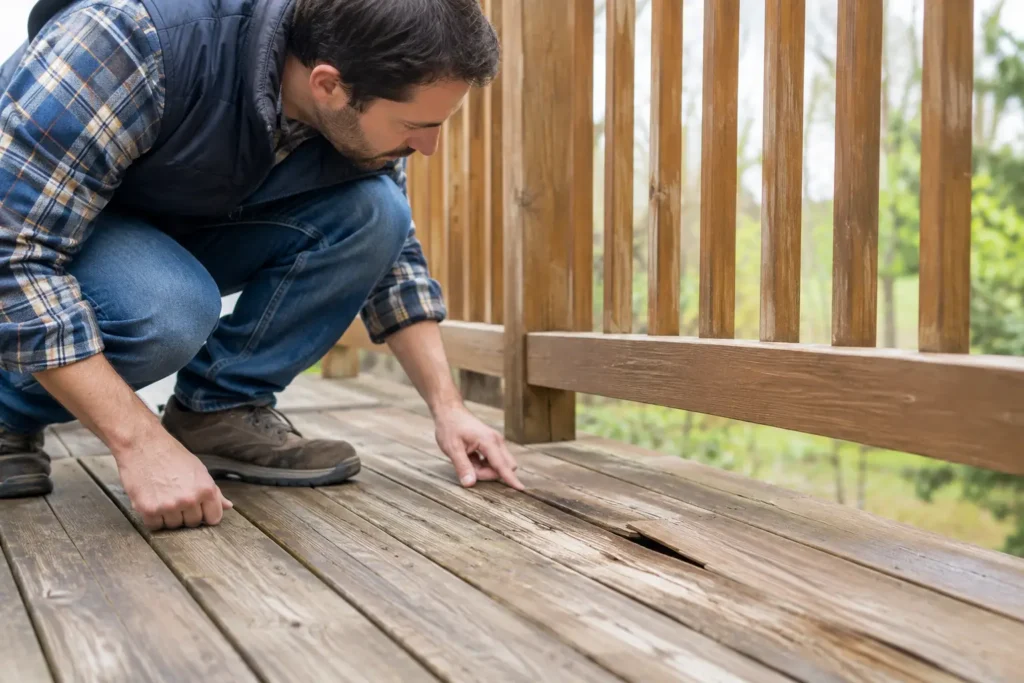
A deck rarely fails without warning. In the Seattle area, months of rain can slowly work into board ends, post bases, and the hidden framing below the surface. Knowing how to tell deck rot gives you a chance to correct a small repair before a favorite outdoor space becomes a safety concern or a full replacement project.
Start with a careful walk-around after the deck has dried enough to inspect. You are looking for more than a weathered gray appearance. Sound wood can look aged and still be structurally solid. Rot changes the wood itself, making it soft, weak, cracked, or unable to hold fasteners. The most serious damage is often where you cannot easily see it: beneath the deck, at ground contact, and around connections to the house.
How to Tell Deck Rot From Normal Weathering
Surface weathering is expected on a Pacific Northwest deck. Sun, rain, pollen, and foot traffic can fade stain, raise wood grain, and create shallow checks. Those cosmetic changes call for cleaning, sealing, or refinishing, not necessarily structural repair.
Rot is different. Wood-decay fungi need moisture, oxygen, and wood fiber. Once moisture stays trapped long enough, the affected material begins to lose density and strength. A board may look only slightly discolored from above but be soft several inches below the surface.
Press suspect areas with the tip of a screwdriver or awl. Sound lumber resists the tool. If the tip sinks in easily, pulls out dark and damp material, or exposes crumbly fibers, assume there is decay until a closer inspection proves otherwise. Test gently. The goal is to identify soft material, not to damage sound boards.
Pay particular attention to board ends, knots, cracks, screw holes, and places where leaves collect. Water follows gravity, but it also sits in small gaps and against unventilated surfaces. On an older deck, one decayed board does not automatically mean the entire structure is failing. It does mean the surrounding framing and drainage details deserve a closer look.
Warning Signs on the Deck Surface
The walking surface is the easiest place to begin, and it can reveal whether water management has been a long-term problem. Look for boards that feel spongy, flex more than neighboring boards, or have deep splits that stay dark inside. A soft spot underfoot is never a finish issue. Keep people off that area until it has been evaluated.
Fasteners are another useful clue. Screw heads that sit proud of the board, nails that repeatedly lift, or screws that spin without tightening may indicate that the wood has weakened around them. Rust stains alone do not always mean rot, but corroded hardware and decayed wood often appear together where moisture has been persistent.
Check railings and stairs as well. A railing should not wobble when you apply normal hand pressure. Stair treads should feel firm, and the stringers supporting them should not show soft areas near the ground or at the bottom step. These are high-use safety components, so even localized decay can justify prompt repair.
The USDA Forest Products Laboratory provides research and technical resources on wood properties, durability, and decay that can help homeowners understand how moisture affects wood.
How to Tell Deck Rot Before It Becomes Unsafe
Knowing how to tell deck rot before it becomes unsafe starts with checking for soft wood, loose fasteners, unstable railings, and signs of moisture damage. Seattle homeowners should also inspect the deck’s supporting joists, beams, and posts because hidden decay can weaken the structure even when the surface looks normal. If you notice sagging, significant softness, or loose structural connections, keep people off the affected area and arrange a professional inspection.
Inspect the Framing Under the Deck
The deck’s most important wood is usually below the decking. Joists, beams, posts, rim boards, and ledgers carry the load. They also receive less sun and airflow, which means they can remain wet long after the top boards appear dry.
Use a flashlight and inspect from a stable position. Do not crawl under a deck if framing looks compromised, if clearance is poor, or if you are unsure whether the structure is safe. Look along the bottoms and ends of joists for dark staining, splitting, fungal growth, sagging, and areas where wood fibers appear stringy or cubed. Brown rot often leaves wood dark, dry-looking, and crumbly. Other decay can leave it pale, soft, or fibrous.
Posts deserve special attention. The most vulnerable location is where a post meets the ground, concrete, or a metal base. Soil piled against wood, standing water around a footing, and old posts set directly into concrete can trap moisture for years. Probe around the lower portion of each post. If the outer shell feels firm but the center is soft, the post may have significant internal decay.
Also look where beams rest on posts and where multiple boards are sandwiched together. Water can enter between members and stay there. Bolts, brackets, and connectors should be present, secure, and free of severe corrosion. A connection can look intact from one angle while the wood behind it has deteriorated.
Do Not Skip the Ledger Board
The ledger is the board that attaches a deck to the house. When properly built, it is flashed to direct water away from the connection and secured with appropriate structural fasteners. When water gets behind failed or missing flashing, decay can develop at the ledger, the house rim, or both.
Possible signs include soft wood at the ledger ends, staining below the deck door, loose fasteners, and gaps where the deck meets the siding. This is not a repair to guess at. The ledger connection supports a major portion of the deck load, and hidden water damage near the house requires a professional inspection.
Where Seattle-Area Decks Commonly Rot First
Our climate does not cause every deck to rot, but it does make design details and maintenance matter. In Seattle, Bellevue, Kirkland, and surrounding communities, shaded yards often dry slowly through fall, winter, and spring. Trees can keep surfaces damp while dropping needles and leaves into gaps that block drainage.
Common trouble spots include deck boards that touch or nearly touch soil, planters placed directly on the deck, rugs left out through wet months, and tight spaces between deck boards. The issue is not rain by itself. Well-built decks are designed to shed water and dry. Problems start when water is held against the wood day after day.
Decks built close to grade need especially careful inspection. Limited clearance restricts airflow, while wet ground raises moisture levels below the framing. In some cases, improving drainage and ventilation can protect otherwise sound framing. In others, decay has advanced far enough that replacing structural members is the safer and more cost-effective choice.
Know When a Repair Is Enough and When It Is Not
A few damaged deck boards can often be replaced if the joists beneath them are solid. Localized handrail repairs, new stair treads, and replacement of a small section of trim can also make sense when the supporting structure is in good condition.
The decision changes when rot affects posts, beams, joists, the ledger, or multiple connected areas. Structural decay is not a place to patch over the surface. Covering soft framing with new decking may make the deck look better temporarily, but it does not restore its load capacity. It can also conceal the problem until repairs become larger and more expensive.
Consider the age and construction of the deck, too. If several boards are failing, hardware is corroded, footing conditions are poor, and framing has widespread decay, replacement may provide better long-term value than repeated spot repairs. A clear onsite assessment should distinguish cosmetic work from structural work and identify what can reasonably be saved.
What to Do After You Find Suspected Rot
If you find soft wood in a walking surface, limit use of that section. If a railing moves, a stair feels unstable, a post is decayed, or the deck has visible sagging, keep people off the deck until it is inspected. Do not rely on stain, wood filler, or a surface patch to correct structural decay.
Take a few photos of the affected area, including a wider view that shows its location. Clear away leaves, stored items, and planters if you can do so safely. That gives an inspector access to the areas that matter and helps produce a more accurate repair scope.
A qualified deck contractor can assess the accessible framing, check critical connections, explain whether repair or replacement is appropriate, and provide a detailed bid with no guessing games. The right recommendation depends on what is damaged, why it stayed wet, and whether the original construction can be brought back to a safe condition.
A deck should feel like a dependable extension of your home, not something you hesitate to step onto after a rainy week. If you have found soft wood, loose railings, or suspicious framing, call Kevin at (425) 449-6739 to schedule an onsite estimate and get a clear plan for a deck built to handle Northwest weather.
Frequently Asked Questions
How can you tell if a deck has wood rot?
Look for soft or spongy boards, crumbling wood fibers, deep cracks, loose fasteners, and discolored areas that remain damp. Check the joists, beams, posts, and ledger board because rot can develop beneath the deck surface.
Can a deck with wood rot be repaired?
Yes, if the damage is limited to a few boards or a small, isolated area and the supporting structure remains sound. If rot affects joists, beams, posts, or the ledger connection, a professional inspection is important to determine the safest repair.
Where does deck rot usually start?
Deck rot commonly begins around board ends, post bases, stairs, joist connections, and the ledger board attached to the house. Areas with poor drainage, limited airflow, or prolonged moisture exposure are particularly vulnerable.
Is a soft deck board always a sign of rot?
Not always, but a soft or spongy board can indicate decay or moisture damage. Check whether the wood fibers are weakened and have the area inspected if the board flexes excessively or feels unstable underfoot.
How can Seattle homeowners prevent deck rot?
Keep leaves and debris off the deck, maintain proper drainage, inspect flashing and structural connections, and apply suitable protective finishes when needed. Regular inspections help identify moisture problems before they cause extensive damage.
When should a rotted deck be replaced instead of repaired?
Replacement may be the better option when decay affects multiple structural components, the framing has widespread damage, or the deck has significant connection and footing problems. A qualified deck contractor can assess the structure and recommend an appropriate solution.
Remember, knowing how to tell deck rot is key to preserving your deck’s integrity.
Regular checks on how to tell deck rot can help maintain the safety of your deck.
It’s vital to know how to tell deck rot before it leads to bigger issues.
Learning how to tell deck rot can save you from costly repairs down the road.
Understanding how to tell deck rot is essential for maintaining your outdoor space.
1 Comment