


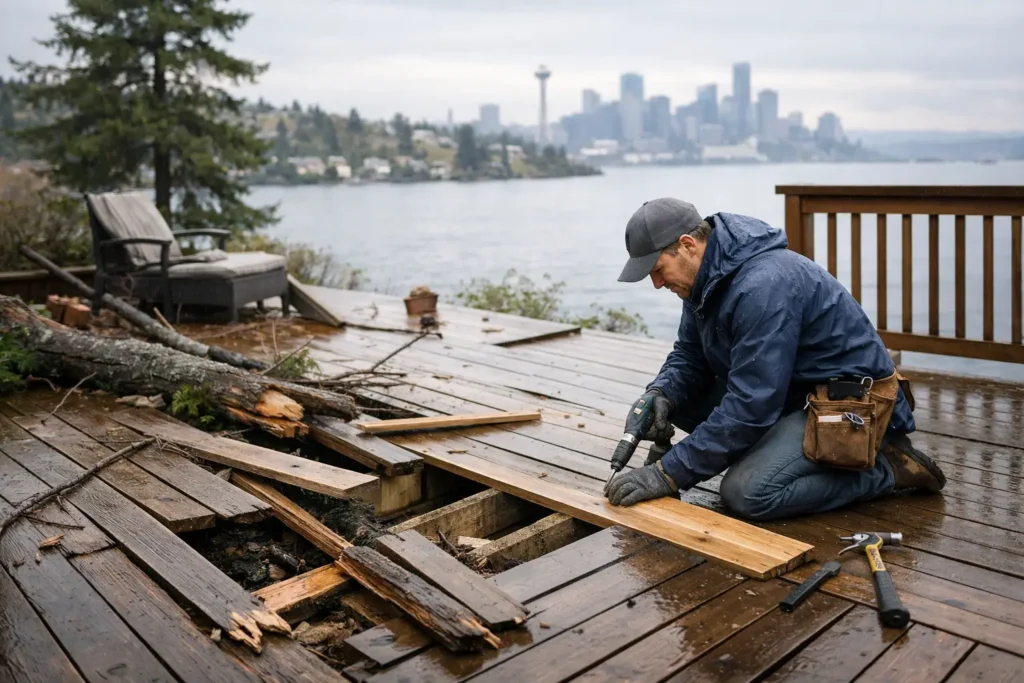
A Seattle windstorm can turn a dependable deck into a safety concern overnight. For deck storm damage repair Seattle homeowners need, the first priority is not cosmetic cleanup.
It is determining whether the deck is safe to walk on, whether its connection to the home is sound, and whether water has reached the framing.
Professional deck storm damage repair Seattle services help homeowners identify hidden structural problems before they become more expensive to fix.
Heavy rain, wind-driven debris, fallen branches, and saturated soil can expose weaknesses that have been building for years.
A loose railing or a few lifted boards may be the visible issue. However, more costly damage often occurs beneath the surface.
Taking time to assess the entire structure protects your family and helps prevent temporary fixes from becoming an early replacement.
Start With Safety After a Storm
Do not assume a deck is safe simply because it is still standing.
If a tree limb hit the structure, a railing shifted, or stairs moved, keep people and pets off the deck until it has been inspected.
Avoid moving heavy outdoor furniture across questionable areas, especially near the house connection, stair landings, or outer beam.
From the ground, look for obvious warning signs. These include leaning posts, cracked beams, sagging sections, displaced footings, loose guardrails, and broken stair stringers.
Water pooling beneath the deck is another concern. In Seattle-area yards, saturated ground can shift around footings and keep framing wet long after the rain stops.
If there are downed power lines or a branch resting on the home, contact the appropriate emergency utility or tree service first.
A deck contractor can assess the structure once the immediate hazard has been addressed.
What a Proper Storm Damage Inspection Should Cover
A useful inspection goes beyond replacing visibly damaged boards.
Decks carry weight through a connected system of decking, joists, beams, posts, footings, stairs, railings, hardware, and the ledger connection at the house.
Storm damage in one part of this system can affect another. A thorough inspection helps identify problems that surface-level repairs might miss.
The Connection to Your Home
The ledger board is where the deck attaches to the home. This area deserves close attention after severe weather.
Water driven behind siding or flashing can damage the connection. Loose bolts, deteriorated wood, and missing flashing can also compromise deck stability.
The repair may require selective removal of decking or siding to inspect what is happening behind the finished surfaces.
Framing, Posts, and Footings
Pacific Northwest moisture can damage older lumber and areas where water cannot drain or dry properly.
A contractor should inspect joists and beams for splitting, rot, insect damage, and excessive movement.
Posts need attention at their bases, where trapped moisture and soil contact can cause hidden deterioration.
Footings matter as much as framing. Wind and falling trees can push a deck sideways, while saturated soil may expose unstable or undersized footings.
If the deck has shifted, repairing only the surface may not be enough.
Railings, Stairs, and Walking Surfaces
Guardrails and stair rails are safety components, not decorative trim.
A railing that feels loose after a storm may have damaged blocking, connectors, or post attachments beneath the deck boards.
Stairs need a separate inspection for cracked stringers, loose treads, unstable landings, and damaged handrails.
Damaged deck boards can sometimes be replaced individually, especially on newer composite or hardwood decking.
However, widespread cupping, soft spots, popped fasteners, or splintering may indicate moisture damage in the framing below.
The appropriate repair depends on what the inspection reveals.
Repair or Replacement: Make the Decision With the Whole Deck in View
Not every storm-damaged deck needs to be rebuilt.
If the structure is sound and damage is limited to a few boards, a railing section, or a stair component, a focused repair can restore safe use at a sensible cost.
Matching materials and colors can be challenging on older decks, especially when the original product has faded or been discontinued.
Replacement becomes the better long-term choice when rot is widespread, multiple structural elements have failed, or the deck is nearing the end of its service life.
Replacing a deck also creates an opportunity to correct drainage, improve stair access, update guardrails, and choose materials suited to year-round rain exposure.
There is a practical middle ground, too. In some cases, the framing can be repaired or strengthened while the walking surface and railings are replaced.
In other situations, the deck boards may be salvageable, but damaged beams, posts, or stairs require reconstruction.
A detailed, fixed-scope bid should explain what can be retained, what must be replaced, and why.
Document Damage Before Cleanup Begins
If you plan to file an insurance claim, take clear photos and videos before removing damaged materials.
Capture wide views of the deck, close-ups of impact points, fallen branches, standing water, cracked components, and any visible damage to the home.
Note the date of the storm and save weather alerts, receipts, and communications related to emergency cleanup.
Insurance coverage depends on the policy, cause of loss, deductible, maintenance history, and the deck’s condition before the storm.
Insurance may help with sudden damage from a fallen tree, for example. Long-term rot and deferred maintenance are often treated differently.
A contractor can provide a repair scope and estimate, but the insurer ultimately determines coverage.
Do not discard damaged components until they have been documented and you have confirmed what your insurer needs.
Reasonable temporary measures to prevent additional damage, such as covering an exposed area or removing dangerous debris, should also be addressed promptly.
Why Seattle Weather Changes the Repair Approach
Seattle decks face more than occasional storms. They experience long wet seasons, shaded yards, moss growth, wind exposure, and moisture trapped in joints and beneath low decks.
Repairs need to account for how the deck will dry after the next storm, not just how it looks when the work is finished.
That can mean using corrosion-resistant connectors and fasteners, protecting field-cut lumber, improving drainage around footings, and installing flashing correctly at the house.
Material selection also matters. Pressure-treated lumber remains a practical option for many projects.
Composite decking can reduce surface maintenance and resist moisture-related deterioration. However, it still needs proper framing, drainage, ventilation, and cleaning.
Choosing the right deck storm damage repair Seattle solution also means considering future weather exposure.
Homeowners should address drainage problems, inspect flashing, and replace damaged hardware with suitable corrosion-resistant components.
For additional guidance, review the City of Seattle’s official construction and permitting resources before starting structural repair work.
A deck beneath dense tree cover may need more attention to airflow and debris management than a sunny, open deck.
A high second-story deck also has different structural and code considerations than a low platform deck.
These are not one-size-fits-all repairs. An on-site assessment is more useful than a guess based on photos alone.
What to Expect From a Clear Repair Scope
A professional storm damage repair process should begin with an assessment of existing conditions and a direct discussion of priorities.
Do you need safe access restored quickly? Are you trying to preserve a newer deck surface?
Is the deck part of a larger project involving a fence, porch, or outdoor living area? The answers help determine the scope.
A clear estimate should separate necessary structural work from optional upgrades.
It should identify proposed materials, explain any likely code-related improvements, and describe how the repair will connect with the existing deck.
This helps homeowners compare bids fairly and avoid low initial pricing that leaves out essential framing, hardware, disposal, or finish work.
Seattle Fence and Decks approaches each project with local weather, the existing structure, and the homeowner’s long-term plans in mind.
With more than 20 years of hands-on experience, the goal is straightforward: repair what can be safely repaired, replace what has failed, and build the finished work to withstand Northwest weather.
Do Not Wait for the Next Storm
Minor damage can become major damage when rain continues to reach exposed framing.
If your deck was hit by wind, debris, or prolonged water exposure, schedule an on-site assessment before returning it to regular use.
Call Kevin at (425) 449-6739 for an estimate and a repair plan suited to how Seattle homeowners use their outdoor spaces.
Professional deck storm damage repair Seattle services can help identify structural problems and determine the safest way to restore your deck.
Addressing damage early can help you make informed decisions about repairs, costs, and future maintenance.
Frequently Asked Questions About Deck Storm Damage Repair Seattle
1. How do I know if my deck has storm damage?
Look for loose railings, cracked boards, leaning posts, damaged stairs, sagging sections, and exposed fasteners.
If the deck feels unstable or a tree limb has struck it, keep people off until a qualified contractor inspects it.
2. How much does deck storm damage repair cost in Seattle?
Costs depend on the extent of damage, materials, labor, and whether structural components need replacement.
Minor board repairs generally require less work than damaged beams, posts, or ledger connections. An on-site assessment provides a more accurate estimate.
3. Can a storm-damaged deck be repaired instead of replaced?
Yes. If the framing, footings, and major connections remain sound, localized repairs may be sufficient.
Extensive rot, multiple failed structural components, or significant movement may make partial rebuilding or full replacement more appropriate.
4. Should I contact my insurance company after deck storm damage?
If the storm caused significant damage, document the affected areas with photos and contact your insurer to review your coverage.
Coverage depends on your policy, the cause of damage, and any applicable exclusions.
5. How can I prevent future storm damage to my deck?
Keep drainage paths clear, remove accumulated leaves, maintain gutters, and inspect railings, stairs, fasteners, and visible framing regularly.
Proper flashing and suitable hardware can also help protect the structure from Seattle’s wet weather.
6. When should I schedule deck storm damage repair in Seattle?
Arrange an inspection as soon as possible after significant damage.
If the deck has loose railings, sagging sections, shifted posts, or damaged stairs, restrict access until it has been assessed and made safe.